
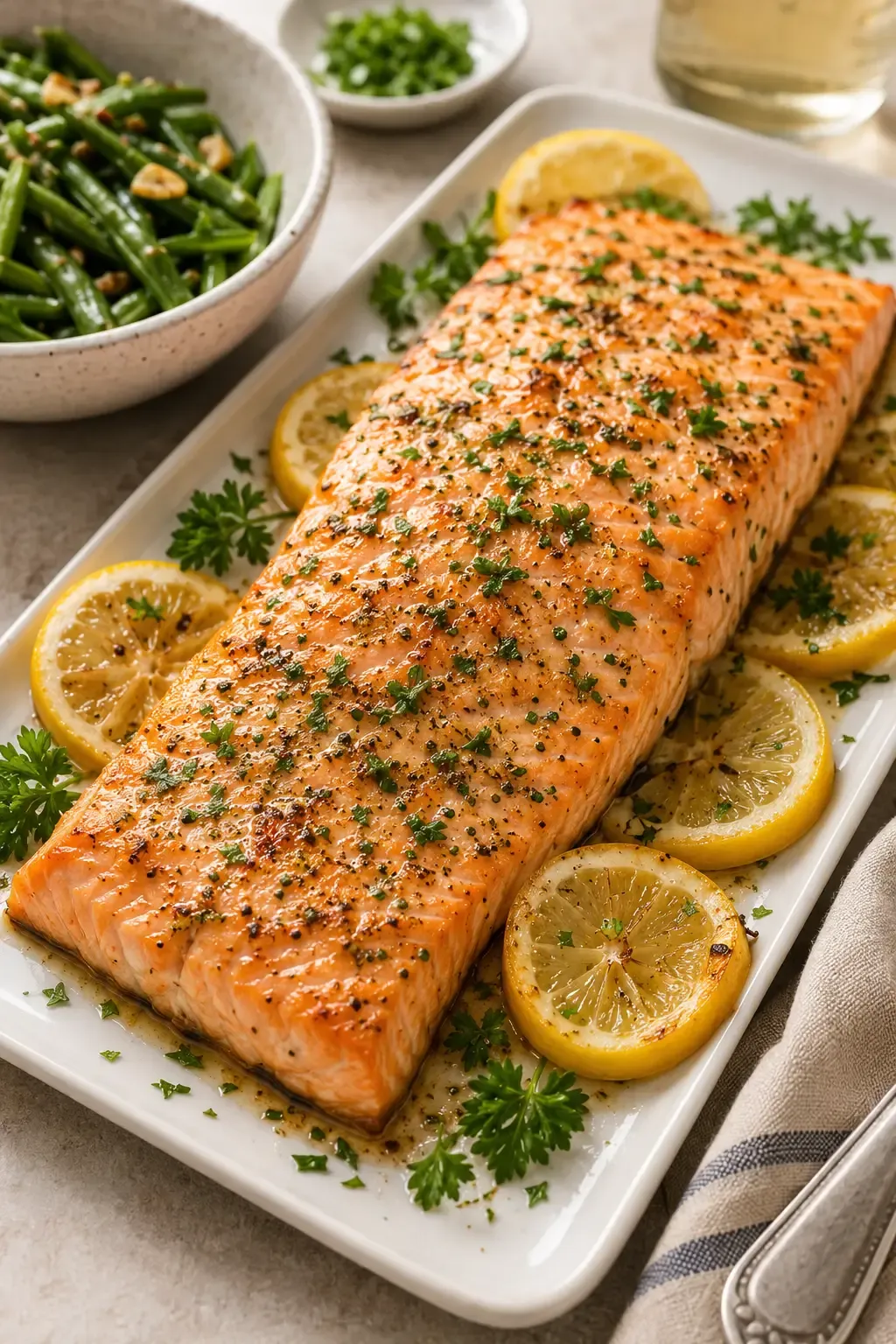
Baked Salmon Recipe
Tender oven-baked salmon with lemon, garlic, olive oil and paprika, finished with fresh parsley and lemon.
Contains: Fish
Contains fish (salmon).
WHY IT WORKS
Why This Recipe Works
01
Hot Oven, Tender Salmon
A 400°F oven cooks individual salmon fillets quickly, helping the centers stay moist while the surface gently browns.
02
Simple Lemon-Garlic Flavor
Olive oil, lemon, garlic and paprika add bright, savory flavor without covering up the salmon.
03
Check the Thickest Part
Starting the temperature check early helps prevent overcooking while still allowing the salmon to reach a safe internal temperature.
WHAT YOU’LL NEED
Equipment
THE RECIPE
Ingredients & Method
Use these cooking tools without leaving the recipe. Change the servings, switch measurements, keep a private note in this browser, and use any timer buttons shown below the method steps.
Ingredient quantities have been scaled. Cooking time, oven temperature, pan size and method timings are unchanged.
My Notes
Ingredients
-
-
-
-
Tools
-
-
-
-
-
-
Method
Tap a step number as you finish it.
Timed steps show a timer button beneath the instruction.
-
Heat the oven to 400°F. Line a rimmed baking sheet with parchment paper or aluminum foil.
-
Pat the salmon fillets dry with paper towels. Arrange them on the prepared baking sheet, skin-side down if they have skin, leaving a little space between the pieces.
-
In a small bowl, stir together the olive oil, garlic, lemon juice, lemon zest, paprika, salt and black pepper. Spoon or brush the mixture evenly over the tops and sides of the salmon.
-
Bake for 12 to 16 minutes, depending on thickness. Start checking at 12 minutes and continue cooking until the thickest part reaches 145°F on a food thermometer.
-
Let the salmon stand for 2 to 3 minutes, then sprinkle with parsley and serve with the lemon wedges.
COOKING GUIDANCE
Practical Cooking Notes
Doneness
145°F / 63°C
Check the thickest part with a food thermometer and cook until it reaches 145°F. Because fillet thickness varies, begin checking at 12 minutes rather than relying on time alone.
Recipe tools
Adapt This Recipe
Change the quantities, measurements, pan, cooking method or ingredients, then turn what you need into a shopping list.
Dietary options
Make This Recipe Work for You
Only straightforward swaps are offered automatically. If changing a defining ingredient would effectively create a different dish, that conversion is left out.
For allergies, intolerances or strict dietary requirements, check the labels of the specific products you use. These swaps do not certify a recipe or ingredient as allergen-free.
Recipe Notes
Ingredient Notes
Use salmon fillets of similar thickness so they finish at roughly the same time. Skin-on or skinless fillets both work; if using skin-on salmon, bake it skin-side down. Patting the surface dry helps the lemon-garlic oil cling evenly.
Useful Substitutions
Fresh or fully thawed frozen salmon both work well. Lime juice can replace the lemon juice for a slightly different citrus flavor, and finely chopped dill can replace the parsley.
INGREDIENT QUALITY
Quality Note
Choose salmon fillets of similar thickness and pat them dry before seasoning. Start checking the thickest fillet at 12 minutes so thinner portions can be removed before they overcook.
SPEND LESS
Cost-Saving Tip
A larger side of salmon can be better value than individually portioned fillets. Cut it into similar-size portions at home and freeze any extra portions you will not cook within 1 to 2 days.
COOKING TIPS
Tips
Choose Similar Fillets
Fillets with a similar thickness are more likely to finish together. If one piece is much thinner, check it first and remove it when done.
Pat the Salmon Dry
Blotting away excess surface moisture before seasoning helps the oil and seasonings coat the fish more evenly.
Start Checking at 12 Minutes
Salmon thickness varies, so treat the baking time as a range. Check the thickest part with a food thermometer rather than extending the bake automatically.
Add Lemon After Baking
Serving the baked salmon with fresh lemon wedges gives a brighter citrus finish than adding extra juice before it goes into the oven.
MAKE IT LAST
Storing, Freezing & Reheating
Storing
Refrigerate cooked salmon within 2 hours in a covered, shallow container and use it within 3 to 4 days.
Freezing
Cool the salmon completely, wrap portions well and freeze in an airtight container or bag. For best quality, use within about 3 months and thaw overnight in the refrigerator.
Reheat in the Oven
Cover the salmon loosely and warm it in a 300°F oven until hot throughout. For reheated leftovers, heat the center to 165°F.
Reheat in the Microwave
Cover a portion and microwave at reduced power in short intervals until hot throughout, checking frequently so the salmon does not dry out.
ESTIMATED PER SERVING
Nutrition
1 salmon fillet
Nutrition information is an estimate. Where shown, % Daily Value uses standard US Daily Values for adults and children aged 4+; actual values vary with ingredient brands, exact quantities and portion size.
QUESTIONS
Baked Salmon FAQs
How long does salmon take to bake at 400°F?
Individual fillets about 1 inch thick usually take roughly 12 to 16 minutes at 400°F. Thickness matters more than weight, so begin checking the thickest part at 12 minutes.
What temperature should baked salmon reach?
Cook salmon to 145°F in the thickest part as measured with a food thermometer. Start checking before the end of the stated time range so the fish does not cook longer than necessary.
Can I bake salmon with the skin on?
Yes. Put skin-on fillets skin-side down on the lined baking sheet. The skin helps protect the underside of the fish during baking and can be left behind when serving if you prefer not to eat it.
Can I use frozen salmon?
Yes, but thaw it completely in the refrigerator first and pat it dry before seasoning. Fully thawed fillets cook more predictably than frozen fillets in this recipe.
Do I need to flip salmon while it bakes?
No. Bake the fillets in one position, skin-side down if they have skin. Flipping can make tender cooked salmon more likely to break apart.

Looking for Something Else to Cook?
Browse more SinOrSlim recipes or use the recipe tools to adapt what you already have.