
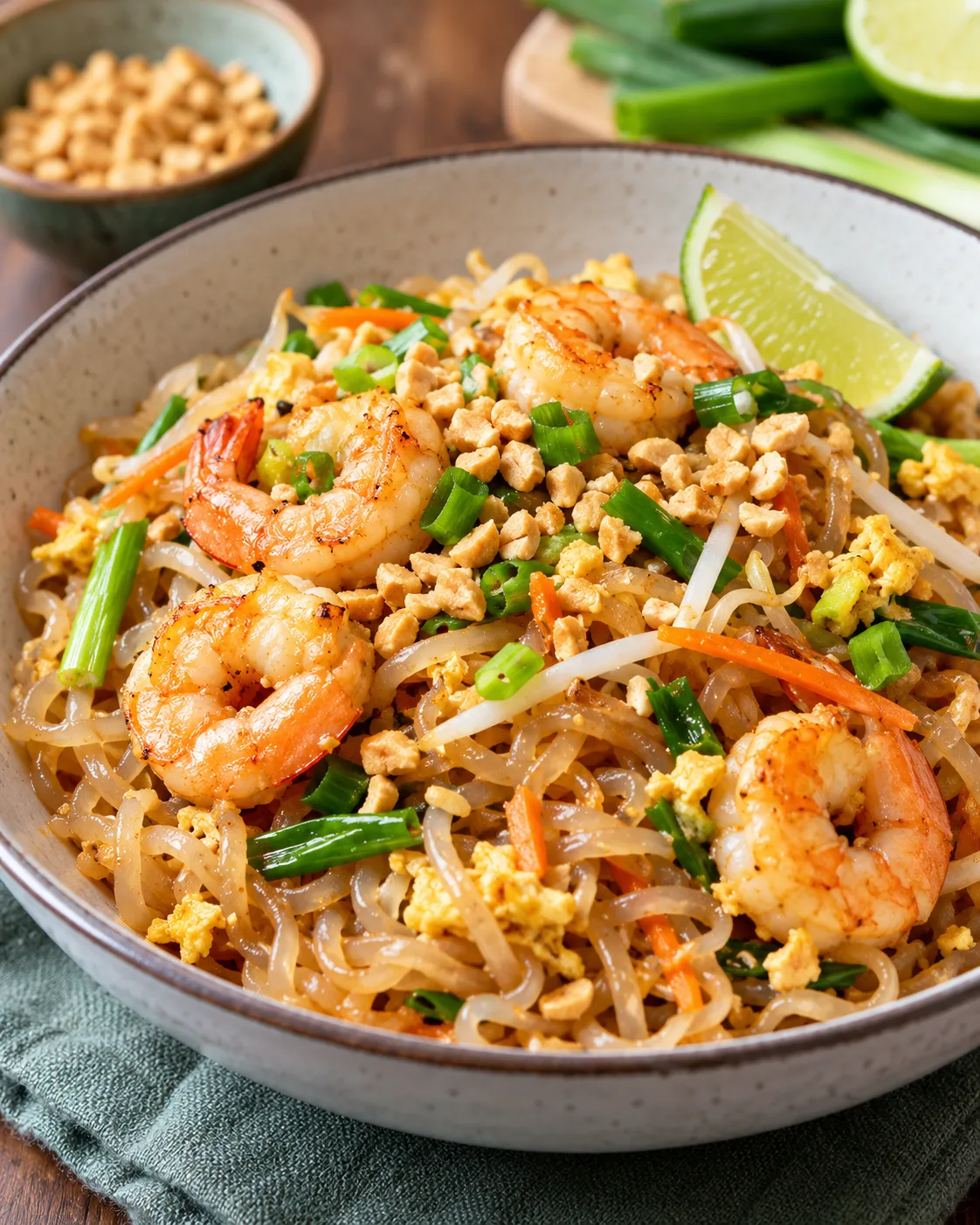
Low-Carb Pad Thai with Miracle Noodles Recipe
Low-carb Pad Thai made with shirataki Miracle Noodles, shrimp, egg and bean sprouts in a tangy tamarind-lime sauce.
Contains: Shellfish · Egg · Fish · Peanuts · Soy
This recipe contains shrimp, egg, fish sauce, peanuts and soy. Check the labels of the shirataki noodles, fish sauce, tamari, tamarind concentrate and sweetener you use because formulations can vary.
WHY IT WORKS
Why This Recipe Works
01
Dry the Noodles First
Rinsing and dry-frying the shirataki noodles removes excess moisture so the sauce clings instead of becoming diluted.
02
Balance the Sauce
Tamarind, fish sauce, lime, tamari and allulose give the noodles the sweet, sour and savory balance Pad Thai needs without ordinary sugar.
03
Cook in Stages
Cooking the shrimp, egg and noodles separately before combining them keeps the shrimp tender and prevents the eggs from disappearing into the sauce.
WHAT YOU’LL NEED
Equipment
THE RECIPE
Ingredients & Method
Use these cooking tools without leaving the recipe. Change the servings, switch measurements, keep a private note in this browser, and use any timer buttons shown below the method steps.
Ingredient quantities have been scaled. Cooking time, oven temperature, pan size and method timings are unchanged.
My Notes
Ingredients
- Pad Thai
-
-
-
-
-
-
-
-
-
- Sauce
-
-
-
-
-
Tools
Method
Tap a step number as you finish it.
Timed steps show a timer button beneath the instruction.
-
In a small bowl, whisk together the fish sauce, tamarind concentrate, allulose, tamari and 1 tablespoon (tbsp) lime juice until the sweetener is mostly dissolved. Set aside.
-
Rinse the shirataki noodles thoroughly under cold running water, drain well and spread them in a large dry nonstick skillet or wok over medium-high heat. Cook for 5 to 7 minutes, tossing often, until the visible moisture has evaporated and the noodles feel slightly firmer. Transfer to a plate.
-
Add 1 tablespoon (tbsp) avocado oil to the skillet. Add the shrimp in a single layer and cook for about 1 1/2 to 2 minutes per side, until opaque and the thickest pieces reach 145°F. Transfer the shrimp to a clean plate.
-
Reduce the heat to medium. Add the remaining 1 tablespoon (tbsp) avocado oil, then add the beaten eggs. Stir for about 30 seconds, just until softly scrambled. Add the garlic and the white parts of the scallions and cook for another 30 seconds.
-
Return the noodles to the skillet and pour in the sauce. Increase the heat to medium-high and toss for about 2 minutes, until the noodles are evenly coated and the sauce has reduced enough to cling to them.
-
Return the shrimp to the skillet and add the bean sprouts. Toss for 1 to 2 minutes, just until the shrimp are hot and the bean sprouts are slightly softened but still crisp.
-
Divide among 4 bowls. Top with the green parts of the scallions and chopped peanuts, and serve with the lime wedges.
COOKING GUIDANCE
Practical Cooking Notes
Doneness
145°F / 63°C
Cook the shrimp until opaque and until the thickest pieces reach 145°F. Remove them promptly so they do not overcook when returned to the skillet.
Make Ahead
Whisk the sauce up to 3 days ahead and refrigerate it in a covered container. The scallions can also be sliced ahead. For the best noodle texture, rinse and dry-fry the shirataki noodles shortly before cooking the dish.
Recipe tools
Adapt This Recipe
Change the quantities, measurements, pan, cooking method or ingredients, then turn what you need into a shopping list.
Dietary options
Make This Recipe Work for You
Only straightforward swaps are offered automatically. If changing a defining ingredient would effectively create a different dish, that conversion is left out.
For allergies, intolerances or strict dietary requirements, check the labels of the specific products you use. These swaps do not certify a recipe or ingredient as allergen-free.
Recipe Notes
Ingredient Notes
Miracle Noodle is a brand of shirataki noodle. Drain and rinse the noodles thoroughly before dry-frying them; this improves both aroma and texture. Use unsweetened tamarind concentrate rather than a sweetened tamarind sauce, and choose fish sauce and tamari labeled gluten-free if you need the finished recipe to remain gluten-free.
Useful Substitutions
Another brand of plain shirataki noodles can replace Miracle Noodles in the same drained weight. A granulated monk fruit-erythritol blend designed to replace sugar 1:1 can replace the allulose, although sweetness and cooling aftertaste vary by brand. Chicken can replace the shrimp in the same general quantity, but the result is no longer the seafood version of this recipe.
INGREDIENT QUALITY
Quality Note
Shirataki noodles improve markedly when they are rinsed well and dry-fried before the stir-fry begins. For the shrimp, use raw peeled shrimp that smell fresh and keep them chilled until you are ready to cook.
SPEND LESS
Cost-Saving Tip
Frozen peeled shrimp can be a good-value option for this recipe. Thaw only the amount you need in the refrigerator, drain well and pat dry before cooking so the pan does not fill with excess water.
COOKING TIPS
Tips
Rinse Thoroughly
Give the shirataki noodles a thorough cold-water rinse before they go into the pan. This removes the packing liquid and makes their flavor much cleaner.
Dry-Fry Until Steamy
Cook the drained noodles without oil until the pan is mostly dry and the noodles look slightly firmer. This step is what keeps the finished Pad Thai from turning watery.
Do Not Overcook the Shrimp
Remove the shrimp as soon as they are opaque and cooked through. They return to the pan at the end, so leaving them in during the whole stir-fry can make them rubbery.
Taste the Sauce
Tamarind concentrates vary in strength. Taste the mixed sauce before adding it and adjust with a little extra lime juice or allulose if your brand is especially sharp.
MAKE IT LAST
Storing, Freezing & Reheating
Storing
Refrigerate leftovers in a covered container within 2 hours and use them within 3 days.
Freezing
Freezing is not recommended. Shirataki noodles can become noticeably tougher after freezing and thawing, and the eggs and bean sprouts lose their best texture.
Reheat in a Skillet
Warm leftovers in a nonstick skillet over medium heat with 1 to 2 tablespoons (tbsp) water, tossing just until hot throughout. Avoid prolonged cooking, which can toughen the shrimp.
ESTIMATED PER SERVING
Nutrition
1 of 4 servings
Nutrition information is an estimate. Where shown, % Daily Value uses standard US Daily Values for adults and children aged 4+; actual values vary with ingredient brands, exact quantities and portion size.
QUESTIONS
Low-Carb Pad Thai with Miracle Noodles FAQs
What are Miracle Noodles?
Miracle Noodle is a brand of shirataki noodles, which are made primarily from konjac. They contain far fewer digestible carbohydrates than ordinary rice noodles and work well here once they are rinsed and dry-fried.
How do I stop shirataki noodles from making Pad Thai watery?
Drain and rinse them thoroughly, then cook them in a dry skillet for several minutes before adding oil or sauce. Removing that extra moisture is the most important step.
Is this Pad Thai really low in carbohydrates?
It is much lower in carbohydrate than a typical rice-noodle Pad Thai because it uses shirataki noodles and allulose instead of rice noodles and sugar. The exact carbohydrate count still varies with the brands of tamarind, noodles and sweetener you use.
Can I make the sauce ahead of time?
Yes. Whisk the sauce together and refrigerate it in a covered container for up to 3 days. Stir it again before adding it to the hot noodles.
Can I use chicken instead of shrimp?
Yes. Thinly sliced chicken can be cooked in the same skillet until safely cooked through before you continue with the eggs and noodles, although the finished dish will no longer be the seafood version.
Looking for Something Else to Cook?
Browse more SinOrSlim recipes or use the recipe tools to adapt what you already have.