
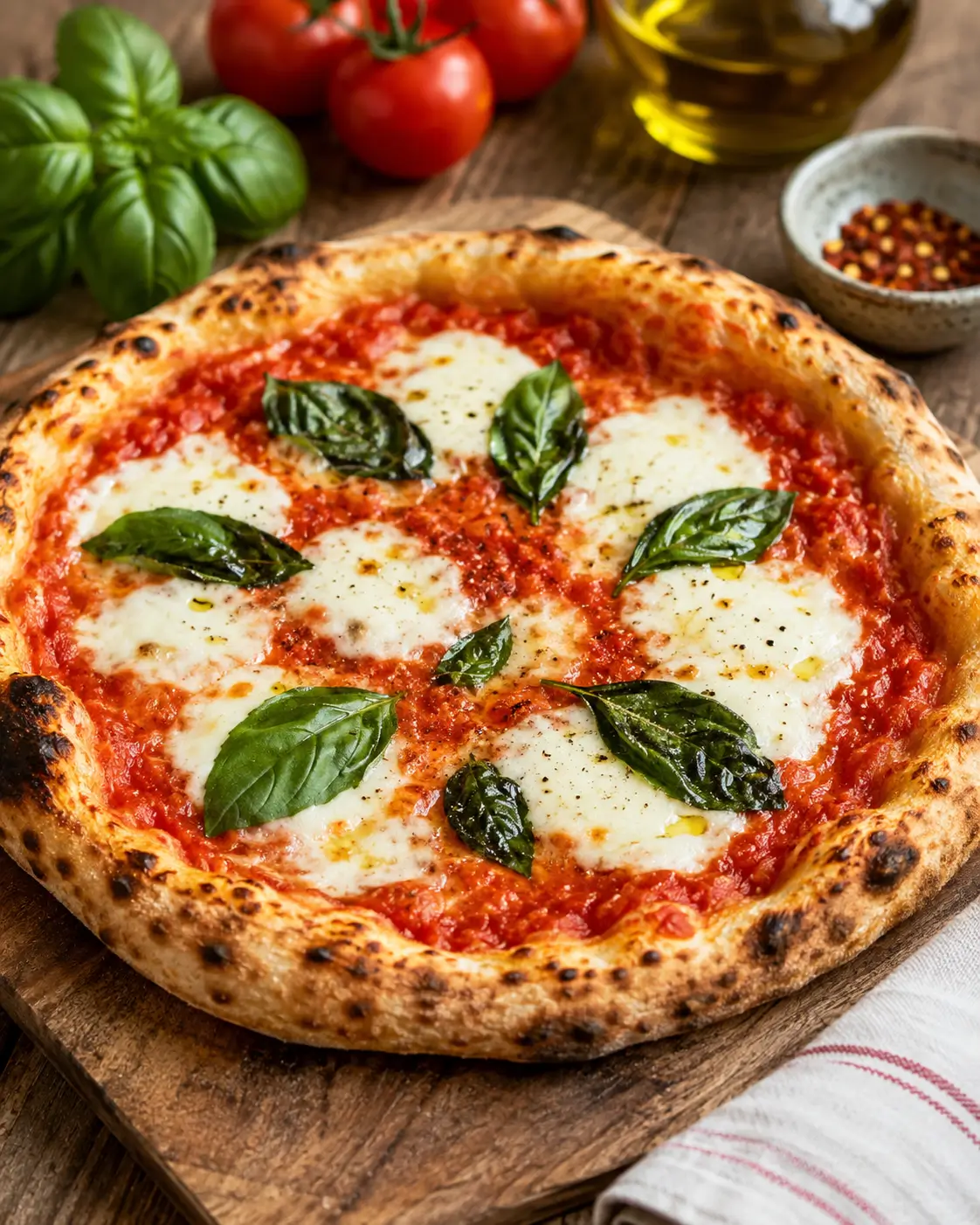
Margherita Pizza Recipe
Classic homemade Margherita pizza with a crisp, chewy crust, simple tomato sauce, fresh mozzarella and basil.
Contains: Wheat · Milk
This recipe contains wheat and milk. If you are cooking for someone with an allergy, check the labels of the flour, yeast and mozzarella you use and consider cross-contact in your own kitchen.
WHY IT WORKS
Why This Recipe Works
01
Build a Crisp, Chewy Crust
A simple bread-flour dough with enough water for stretch bakes into a crust that is crisp underneath while staying pleasantly chewy.
02
Keep the Topping Light
A thin layer of crushed tomato and well-drained fresh mozzarella keeps the pizza balanced and helps the center bake without becoming soggy.
03
Use Strong Bottom Heat
A thoroughly preheated pizza stone or steel gives the base fast, direct heat so the crust can brown before the toppings overcook.
WHAT YOU’LL NEED
Equipment
THE RECIPE
Ingredients & Method
Use these cooking tools without leaving the recipe. Change the servings, switch measurements, keep a private note in this browser, and use any timer buttons shown below the method steps.
Ingredient quantities have been scaled. Cooking time, oven temperature, pan size and method timings are unchanged.
My Notes
Ingredients
- Pizza Dough
-
-
-
-
-
- Topping
-
-
-
Method
Tap a step number as you finish it.
Timed steps show a timer button beneath the instruction.
-
In a large mixing bowl, stir together the bread flour, instant yeast and 3/4 teaspoon (tsp) of the sea salt.
-
Add the warm water and 2 teaspoons (tsp) of the olive oil. Stir until a shaggy dough forms, then knead on a lightly floured surface for 6 to 8 minutes, until smooth and elastic.
-
Lightly oil the bowl, return the dough to it, cover and leave at room temperature for about 60 minutes, until noticeably puffy and roughly doubled in size.
-
About 45 minutes before you plan to bake, place a pizza stone or steel on a rack in the upper-middle of the oven and heat the oven to 500°F.
-
Stir the crushed tomatoes with the remaining 1/4 teaspoon (tsp) sea salt and 1 teaspoon (tsp) olive oil.
-
Turn the risen dough onto a surface dusted with the extra flour. Press out the center, then gently stretch the dough into an approximately 14-inch round, leaving a slightly thicker rim. Transfer it to a lightly floured pizza peel or rimless baking sheet.
-
Spread the tomato mixture over the dough, leaving about a 1-inch border. Scatter the drained mozzarella evenly over the sauce.
-
Slide the pizza onto the hot stone or steel and bake for 8 to 10 minutes, until the rim is puffed and well browned, the underside is crisp and the mozzarella is melted with a few browned spots.
-
Remove the pizza from the oven, scatter over the basil leaves and let it rest for 2 minutes before slicing.
COOKING GUIDANCE
Practical Cooking Notes
Doneness
The pizza is ready when the crust is puffed and well browned at the edges, the underside is crisp and the mozzarella is melted with a few browned spots.
Make Ahead
The dough can be made up to 24 hours ahead. After kneading, place it in a lightly oiled covered container and refrigerate it. Bring it out about 60 minutes before shaping so it can lose its chill and become easier to stretch.
Recipe tools
Adapt This Recipe
Change the quantities, measurements, pan, cooking method or ingredients, then turn what you need into a shopping list.
Dietary options
Make This Recipe Work for You
Only straightforward swaps are offered automatically. If changing a defining ingredient would effectively create a different dish, that conversion is left out.
For allergies, intolerances or strict dietary requirements, check the labels of the specific products you use. These swaps do not certify a recipe or ingredient as allergen-free.
Recipe Notes
Ingredient Notes
Bread flour gives the dough enough strength to stretch thinly while keeping a chewy edge. Fresh mozzarella carries more moisture than low-moisture mozzarella, so drain it well and tear it into small pieces before topping the pizza.
Useful Substitutions
All-purpose flour can replace the bread flour, although the crust will usually be a little softer and less chewy. If fresh mozzarella is unavailable, use a modest amount of low-moisture whole-milk mozzarella; the pizza will be less delicate but should brown more readily.
INGREDIENT QUALITY
Quality Note
Drain the fresh mozzarella well and blot away excess surface moisture before topping the pizza. Too much liquid can pool on the crust before it has time to crisp.
SPEND LESS
Cost-Saving Tip
A standard can of crushed tomatoes makes more sauce than one pizza needs. Freeze the remainder in small pizza-sized portions so it is ready for another batch instead of going to waste.
COOKING TIPS
Tips
Drain the Mozzarella
Let fresh mozzarella drain, then blot away obvious surface moisture before tearing it over the pizza. This reduces watery patches on the finished crust.
Stretch, Don’t Roll
Press the center outward with your fingertips and stretch the dough gently. Keeping a slightly thicker rim helps the edge puff in the hot oven.
Preheat Thoroughly
Give the stone or steel the full preheat time. The oven air may reach 500°F before the baking surface has stored enough heat to crisp the base.
Add Basil After Baking
Scatter the basil over the pizza as it comes out of the oven so it stays fragrant and green instead of drying out during the bake.
MAKE IT LAST
Storing, Freezing & Reheating
Storing
Refrigerate leftover pizza within 2 hours in a covered container and use it within 3 to 4 days.
Freezing
Cool the pizza completely, separate slices with baking parchment and freeze them in an airtight container or bag. For best texture, use within about 2 months.
Reheat in the Oven
Place slices on a baking sheet and warm at 400°F for about 5 to 8 minutes, until the base is crisp again and the cheese is hot.
Reheat in a Skillet
Warm a slice in a covered skillet over medium-low heat for about 4 to 6 minutes. The pan recrisps the base while the trapped heat melts the cheese.
ESTIMATED PER SERVING
Nutrition
1/4 of the pizza
Nutrition information is an estimate. Where shown, % Daily Value uses standard US Daily Values for adults and children aged 4+; actual values vary with ingredient brands, exact quantities and portion size.
QUESTIONS
Margherita Pizza FAQs
How do I keep Margherita pizza from getting soggy?
Drain the fresh mozzarella well, keep the tomato layer thin and bake on a thoroughly preheated stone or steel. Those steps help the base set and brown before moisture from the topping can soak in.
Can I use all-purpose flour instead of bread flour?
Yes. Use the same amount of all-purpose flour. The dough may feel slightly softer and the baked crust will generally be a little less chewy, but the recipe will still work.
Can I make Margherita pizza without a pizza stone?
Yes. Preheat a heavy baking sheet upside down and slide the pizza onto the hot surface. The base may be a little less crisp than it would be on a stone or steel.
Can I make the dough ahead of time?
Yes. Refrigerate the kneaded dough in a covered, lightly oiled container for up to 24 hours, then let it stand at room temperature for about 60 minutes before stretching.
Why is the basil added after baking?
Fresh basil can darken and dry in a very hot oven. Adding it as the pizza comes out keeps its color and fresh aroma while the residual heat gently wilts the leaves.


Looking for Something Else to Cook?
Browse more SinOrSlim recipes or use the recipe tools to adapt what you already have.