
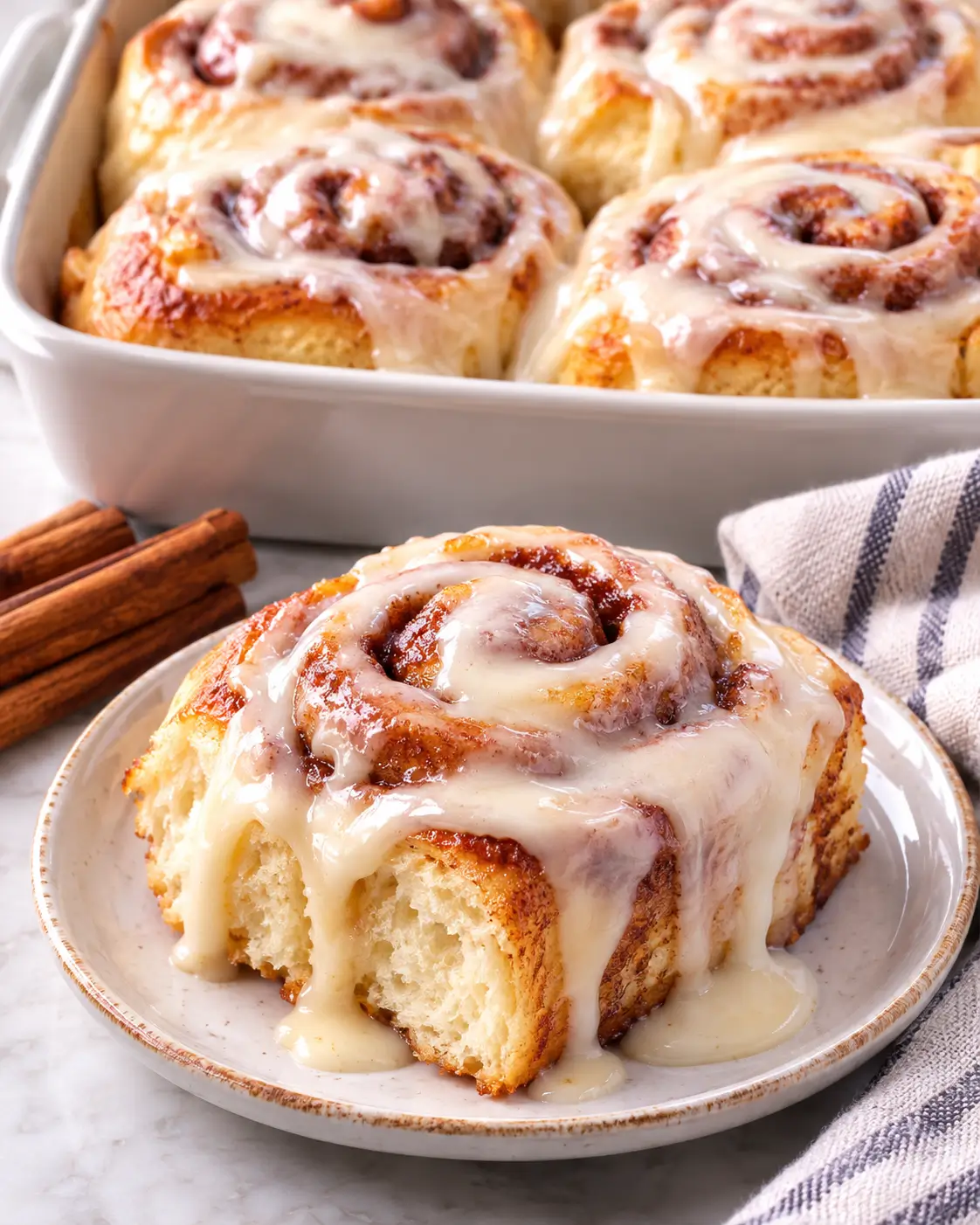
Cinnamon Roll Recipe
Soft homemade cinnamon rolls with a buttery brown sugar and cinnamon filling, finished with a simple vanilla glaze.
Contains: Milk · Egg · Wheat
Contains milk, egg and wheat. The Nut-Free classification describes the ingredients as written and is not a certification against manufacturing or kitchen cross-contact.
WHY IT WORKS
Why This Recipe Works
01
Build a Soft Dough
Warm milk, egg and butter create a tender enriched dough, while careful flour additions keep the rolls soft rather than dry.
02
Give the Dough Time
Two simple rises give the yeast time to aerate the dough so the baked rolls are light, soft and easy to pull apart.
03
Balance the Filling
A straightforward butter, brown sugar and cinnamon filling gives every spiral plenty of flavor without adding extra toppings or mix-ins.
WHAT YOU’LL NEED
Equipment
THE RECIPE
Ingredients & Method
Use these cooking tools without leaving the recipe. Change the servings, switch measurements, keep a private note in this browser, and use any timer buttons shown below the method steps.
Ingredient quantities have been scaled. Cooking time, oven temperature, pan size and method timings are unchanged.
My Notes
Ingredients
- Dough
-
Tools
-
-
-
-
Tools
-
Tools
-
-
- Cinnamon Filling
-
Tools
-
Tools
-
-
- Vanilla Glaze
-
-
Tools
-
Tools
Method
Tap a step number as you finish it.
Timed steps show a timer button beneath the instruction.
-
Pour the warm milk into a large mixing bowl. Stir in the active dry yeast and 1 teaspoon (tsp) of the measured granulated sugar. Leave for about 5 to 10 minutes, until the surface looks creamy or foamy. If the yeast shows no activity, start again with fresh yeast before adding the remaining ingredients.
-
Add the remaining granulated sugar, egg, melted butter and vanilla extract. Stir to combine. Add the flour and salt and mix until a shaggy dough forms.
-
Knead the dough by hand on a lightly floured surface for about 6 to 8 minutes, until smooth, elastic and still slightly tacky. If it is genuinely too sticky to handle, add extra flour 1 tablespoon (tbsp) at a time. Place the dough in a lightly greased bowl, cover and leave in a warm place for about 60 minutes, until roughly doubled in size.
-
Lightly grease a 9 by 13-inch baking dish. Stir together the brown sugar, cinnamon and 1/8 teaspoon (tsp) salt. Roll the dough into a rectangle about 14 by 18 inches. Spread the softened butter evenly over the surface, leaving about a 1/2-inch border along one long edge, then sprinkle the cinnamon-sugar mixture evenly over the butter.
-
Starting from the opposite long edge, roll the dough into a snug log without compressing it tightly. Pinch the seam closed, mark the log into 12 equal sections and cut into 12 rolls. Arrange them cut-side up in the prepared dish, cover and leave to rise for about 30 minutes, until puffy.
-
Near the end of the second rise, heat the oven to 350°F. Bake the rolls for about 22 to 25 minutes, until lightly golden and the center rolls are set. For an extra doneness check, the center of a middle roll should be about 190°F.
-
Let the rolls cool in the dish for 10 minutes. Whisk the powdered sugar, 2 tablespoons (tbsp) milk and vanilla extract until smooth. If needed, add a little more milk 1 teaspoon (tsp) at a time for a spoonable glaze. Spoon the glaze over the warm rolls and serve.
COOKING GUIDANCE
Practical Cooking Notes
Doneness
190°F / 88°C
The tops should be lightly golden and the center rolls should look set rather than wet or doughy. For an extra check, the center of a middle roll should be about 190°F.
Make Ahead
Shape the rolls and arrange them in the baking dish, then cover and refrigerate for up to 18 hours. Before baking, let them stand at room temperature for about 45 to 60 minutes, until puffy, then continue with the recipe.
Recipe tools
Adapt This Recipe
Change the quantities, measurements, pan, cooking method or ingredients, then turn what you need into a shopping list.
Dietary options
Make This Recipe Work for You
Only straightforward swaps are offered automatically. If changing a defining ingredient would effectively create a different dish, that conversion is left out.
Make It Dairy-Free
Change the following ingredients:
Replace3/4 US cup whole milk, warmed to about 105 to 110°F
With3/4 US cup unsweetened neutral plant milk, warmed to about 105 to 110°F
Replace180 millilitres (ml) whole milk, warmed to about 40 to 43°C
With180 millilitres (ml) unsweetened neutral plant milk, warmed to about 40 to 43°C
Use the same quantity of an unsweetened neutral plant milk; flavor, protein and browning can differ.
Replace1/4 US cup unsalted butter, melted and cooled slightly
With1/4 US cup unsalted plant-based butter, melted and cooled slightly
Replace57 grams (g) unsalted butter, melted and cooled slightly
With57 grams (g) unsalted plant-based butter, melted and cooled slightly
Use the same quantity of a plant-based butter suited to cooking or baking as required.
Replace1/3 US cup unsalted butter, softened
With1/3 US cup unsalted plant-based butter, softened
Replace75 grams (g) unsalted butter, softened
With75 grams (g) unsalted plant-based butter, softened
Use the same quantity of a plant-based butter suited to cooking or baking as required.
Replace2 tablespoons (tbsp) whole milk, plus more if needed
With2 tablespoons (tbsp) unsweetened neutral plant milk, plus more if needed
Replace30 millilitres (ml) whole milk, plus more if needed
With30 millilitres (ml) unsweetened neutral plant milk, plus more if needed
Use the same quantity of an unsweetened neutral plant milk; flavor, protein and browning can differ.
For allergies, intolerances or strict dietary requirements, check the labels of the specific products you use. These swaps do not certify a recipe or ingredient as allergen-free.
Recipe Notes
Ingredient Notes
The dough should feel soft and slightly tacky after kneading, not stiff or dry. Flour absorbs moisture differently, so add extra flour only if the dough is too sticky to handle; too much can make the baked rolls dense.
Useful Substitutions
Instant yeast can replace active dry yeast in the same amount; add it with the flour and skip the separate foaming step. Dark brown sugar can replace light brown sugar in the filling for a slightly deeper molasses flavor.
INGREDIENT QUALITY
Quality Note
Keep the dough soft and slightly tacky rather than adding flour until it feels dry. Flour absorption varies, and an over-floured dough is one of the easiest ways to make cinnamon rolls dense instead of tender.
SPEND LESS
Cost-Saving Tip
If you bake with yeast regularly, a small jar is often better value per batch than individual packets. Store opened yeast as directed on the package and check that it is still active before relying on it.
COOKING TIPS
Tips
Keep the Milk Warm, Not Hot
Aim for about 105 to 110°F. Milk that is much hotter can damage the yeast, while cool milk will make the first rise take longer.
Do Not Over-Flour the Dough
A slightly tacky dough usually bakes up softer than a dry one. Add extra flour in small amounts only when the dough is genuinely difficult to handle.
Cut the Rolls Evenly
Mark the log into 12 equal sections before cutting. A sharp knife or a piece of unflavored dental floss helps keep the spirals round.
Avoid Overbaking
Start checking at 22 minutes. The tops should be lightly golden and the center rolls should be set; baking much longer can dry the edges.
MAKE IT LAST
Storing, Freezing & Reheating
Storing
Keep cooled cinnamon rolls in an airtight container at room temperature for up to 1 day or refrigerate them for up to 4 days. Bring chilled rolls closer to room temperature before serving or reheat gently.
Freezing
For the neatest result, freeze fully cooled rolls before glazing. Wrap them well and freeze for up to 2 months, then thaw at room temperature and add fresh glaze after reheating.
Reheat in the Oven
Cover the rolls loosely with foil and warm at 300°F for about 8 to 10 minutes, just until soft and heated through. Add glaze after reheating if the rolls were frozen unglazed.
Reheat in the Microwave
Warm one roll for about 10 to 20 seconds at a time until soft and just heated through. Short intervals help prevent the bread from becoming tough.
ESTIMATED PER SERVING
Nutrition
1 roll
Nutrition information is an estimate. Where shown, % Daily Value uses standard US Daily Values for adults and children aged 4+; actual values vary with ingredient brands, exact quantities and portion size.
QUESTIONS
Cinnamon Roll FAQs
Can I make cinnamon rolls ahead of time?
Yes. Shape the rolls, cover the baking dish and refrigerate overnight. The next day, let them stand at room temperature for about 45 to 60 minutes, until puffy, before baking.
Why did my cinnamon roll dough not rise?
The most common causes are inactive yeast, milk that was too hot or a cool room. Give the dough a warm, draft-free place to rise and make sure the yeast is within date.
Can I use instant yeast instead of active dry yeast?
Yes. Use the same amount of instant yeast, mix it with the flour and skip the separate foaming step. The dough may rise a little faster, so judge it by volume rather than the clock alone.
How do I cut cinnamon rolls without squashing them?
Mark the rolled dough into 12 equal sections first, then use a sharp knife with a gentle sawing motion or slide unflavored dental floss underneath the log and cross the ends over the top to cut each piece.
How do I know when cinnamon rolls are baked?
The tops should be lightly golden and the center rolls should look set rather than doughy. For an extra check, the center of a middle roll should be about 190°F.

Looking for Something Else to Cook?
Browse more SinOrSlim recipes or use the recipe tools to adapt what you already have.