
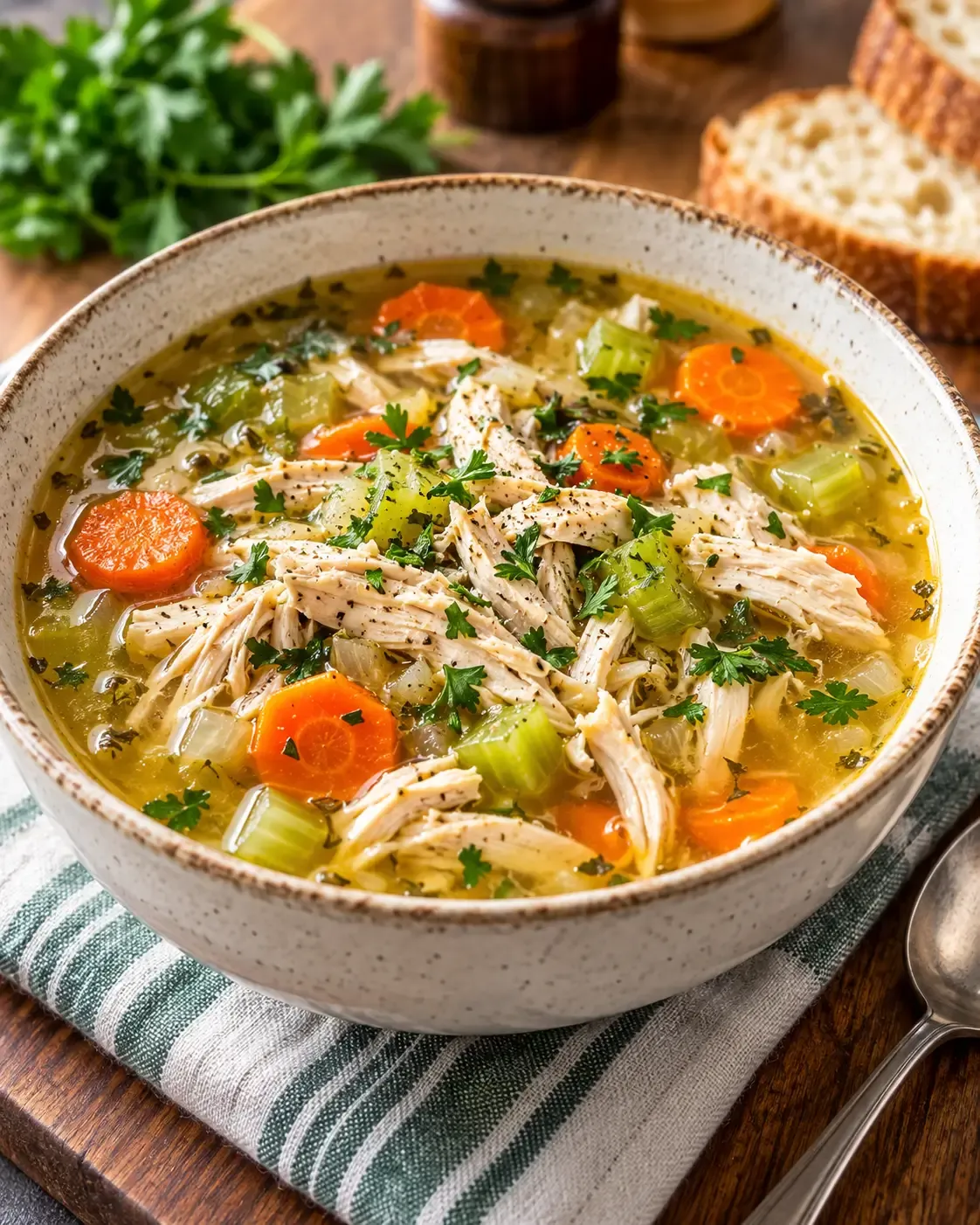
Chicken Soup Recipe
A hearty chicken soup with tender chicken thighs, carrots, celery, onion and herbs simmered in a savory broth.
No major allergen is required by the base recipe, but packaged chicken broth formulations vary. Check the broth label if you need to avoid gluten or another specific allergen.
WHY IT WORKS
Why This Recipe Works
01
Build Flavor First
Softening the onion, carrots and celery in olive oil before adding the broth gives the soup a fuller, more rounded base.
02
Keep the Simmer Gentle
A steady, gentle simmer cooks the chicken thighs through while helping them stay tender enough to shred easily.
03
Finish Fresh
Fresh parsley goes in at the end so its clean herbal flavor stays bright rather than disappearing during the longer simmer.
WHAT YOU’LL NEED
Equipment
THE RECIPE
Ingredients & Method
Use these cooking tools without leaving the recipe. Change the servings, switch measurements, keep a private note in this browser, and use any timer buttons shown below the method steps.
Ingredient quantities have been scaled. Cooking time, oven temperature, pan size and method timings are unchanged.
My Notes
Ingredients
Method
Tap a step number as you finish it.
Timed steps show a timer button beneath the instruction.
-
Heat the olive oil in a large heavy-bottomed soup pot over medium heat.
-
Add the onion, carrots and celery. Cook for about 7 to 8 minutes, stirring occasionally, until the onion is softened and the vegetables have started to lose their raw edge.
-
Add the garlic and dried thyme and cook for about 30 seconds, stirring, until fragrant.
-
Add the chicken thighs, chicken broth, bay leaves, kosher salt and black pepper. Bring just to a boil, then reduce the heat to a gentle simmer. Cover partially and cook for about 20 to 25 minutes, until the thickest part of the chicken reaches 165°F.
-
Transfer the chicken to a clean board or bowl. Let it cool just enough to handle, then shred or cut it into bite-size pieces.
-
Return the chicken to the pot and simmer gently for 5 minutes. Remove and discard the bay leaves.
-
Stir in the parsley. Taste and add more salt or black pepper if needed, then serve hot.
COOKING GUIDANCE
Practical Cooking Notes
Doneness
165°F / 74°C
Check the thickest part of the chicken with a food thermometer before shredding. Once it reaches 165°F, remove it from the pot so it does not continue cooking unnecessarily.
Make Ahead
Make the soup up to 3 days ahead. Cool it promptly, refrigerate it in a covered container and reheat only the amount you need until steaming hot throughout.
Recipe tools
Adapt This Recipe
Change the quantities, measurements, pan, cooking method or ingredients, then turn what you need into a shopping list.
Dietary options
Make This Recipe Work for You
Only straightforward swaps are offered automatically. If changing a defining ingredient would effectively create a different dish, that conversion is left out.
For allergies, intolerances or strict dietary requirements, check the labels of the specific products you use. These swaps do not certify a recipe or ingredient as allergen-free.
Recipe Notes
Ingredient Notes
Boneless, skinless chicken thighs stay tender during simmering and give the broth more flavor than very lean chicken. Unsalted chicken broth makes it easier to control the final seasoning because packaged broths can vary widely in saltiness.
Useful Substitutions
Boneless, skinless chicken breasts can replace the thighs in the same quantity; start checking them a little earlier so they do not overcook. If you use regular or reduced-sodium chicken broth instead of unsalted broth, reduce the added salt at first and adjust after the soup is finished.
INGREDIENT QUALITY
Quality Note
Use a good-tasting unsalted chicken broth and keep the soup at a gentle simmer once the chicken is added. The broth is a major part of the finished flavor, and hard boiling can make the chicken less tender.
SPEND LESS
Cost-Saving Tip
Chicken thighs are often good value and stay tender in soup. If a larger pack is cheaper per pound, portion and freeze the extra raw thighs for another meal.
COOKING TIPS
Tips
Cut the Vegetables Evenly
Keep the carrot and celery pieces similar in size so they soften at roughly the same rate and stay pleasant to eat.
Keep the Simmer Gentle
Once the broth comes up to heat, lower it to a gentle simmer. A hard boil can make the chicken tougher and the broth cloudier.
Shred, Then Return
Take the cooked chicken out before shredding it, then return the bite-size pieces to the pot for just a few minutes so they stay tender.
Season at the End
Taste after the chicken has gone back into the soup. Broth strength varies, so final seasoning is more reliable than adding extra salt early.
MAKE IT LAST
Storing, Freezing & Reheating
Storing
Cool the soup promptly, refrigerate it in covered containers within 2 hours, and use it within 3 to 4 days.
Freezing
Freeze cooled soup in airtight containers, leaving a little room for expansion. For best quality, use it within about 3 months and thaw overnight in the refrigerator.
Reheat on the Stovetop
Warm the soup in a saucepan over medium-low heat, stirring occasionally, until it is steaming hot throughout and reaches 165°F.
Reheat in the Microwave
Reheat individual portions in a microwave-safe bowl in short intervals, stirring between each, until steaming hot throughout and reaching 165°F.
ESTIMATED PER SERVING
Nutrition
1 of 6 servings
Nutrition information is an estimate. Where shown, % Daily Value uses standard US Daily Values for adults and children aged 4+; actual values vary with ingredient brands, exact quantities and portion size.
QUESTIONS
Chicken Soup FAQs
How do I keep the chicken tender in soup?
Use chicken thighs and keep the soup at a gentle simmer rather than a hard boil. Remove the chicken as soon as it is cooked through, shred it, then return it only briefly before serving.
What temperature should the chicken reach?
Cook the thickest part of the chicken to 165°F as measured with a food thermometer before shredding it and returning it to the soup.
Can I use chicken breasts instead of thighs?
Yes. Use the same weight of boneless, skinless chicken breasts, but begin checking them a few minutes earlier because breast meat can dry out more quickly.
Why use unsalted chicken broth?
Unsalted broth gives you control over the final seasoning. If you use regular or reduced-sodium broth, add less salt at first and adjust only after the soup is finished.
Can I make chicken soup ahead of time?
Yes. Make the soup up to 3 days ahead, cool it promptly and refrigerate it in a covered container. Reheat only the amount you need until steaming hot throughout.


Looking for Something Else to Cook?
Browse more SinOrSlim recipes or use the recipe tools to adapt what you already have.