Chow Mein Recipe
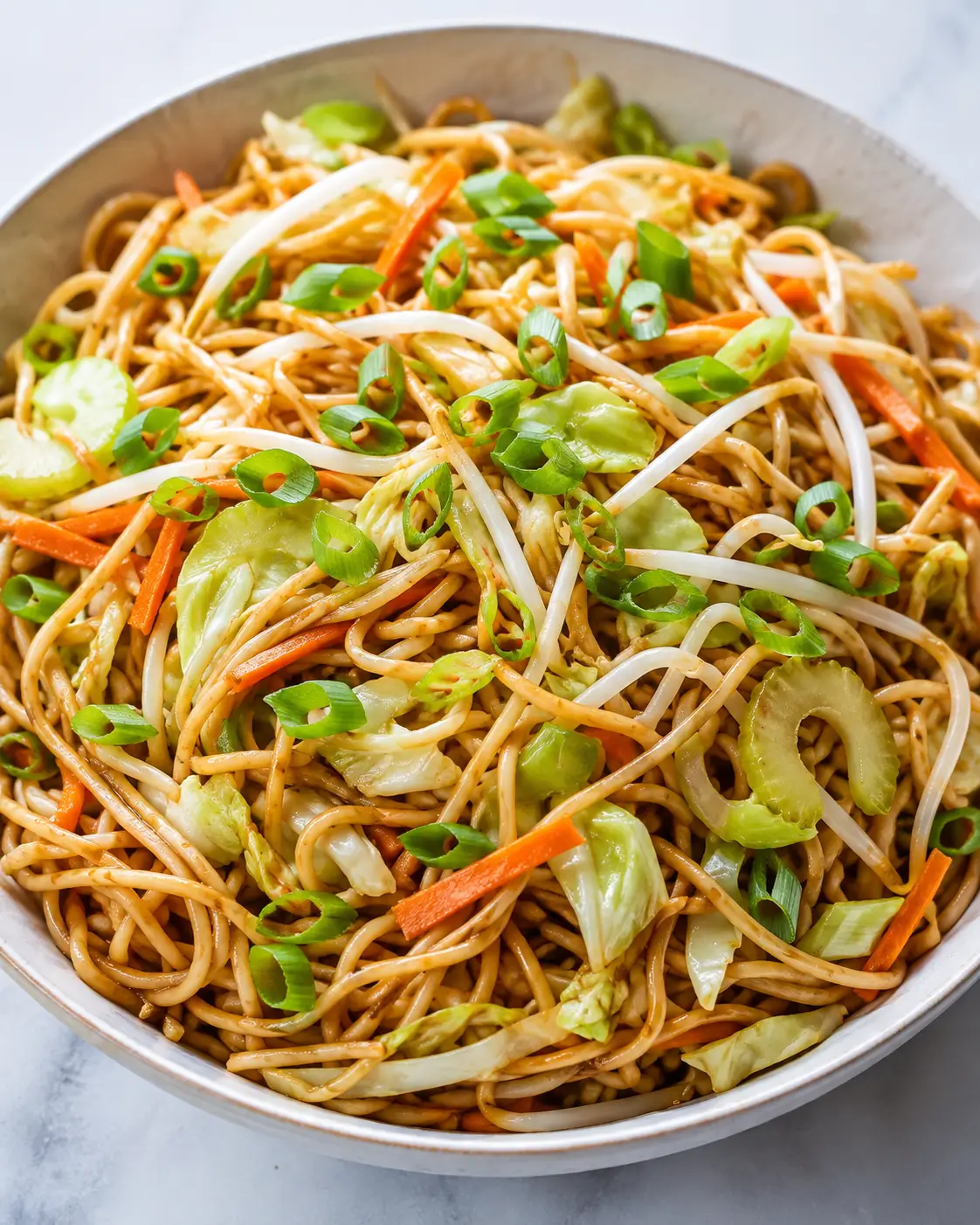
Easy homemade chow mein with stir-fried noodles, cabbage, carrot, celery, bean sprouts and green onions in a savory soy-sesame sauce.
Contains: Egg · Wheat · Soy · Sesame
The noodles, soy sauce and vegetarian oyster sauce are packaged products and formulations vary. Check the labels of the products you use if wheat, egg, soy or sesame allergens are a concern.
WHY IT WORKS
Why This Recipe Works
01
Build Flavor Fast
A simple soy-sesame sauce coats the noodles evenly while garlic, ginger and green onion add fresh aromatic flavor.
02
Keep the Vegetables Crisp
Stir-frying the cabbage, carrot and celery over high heat keeps them tender-crisp instead of soft and watery.
03
Finish in the Pan
Adding the drained noodles and sauce at the end lets the noodles absorb flavor and pick up a little browning without becoming soggy.
WHAT YOU’LL NEED
Equipment
THE RECIPE
Ingredients & Method
Use these cooking tools without leaving the recipe. Change the servings, switch measurements, keep a private note in this browser, and use any timer buttons shown below the method steps.
Ingredient quantities have been scaled. Cooking time, oven temperature, pan size and method timings are unchanged.
My Notes
Ingredients
-
Tools
-
Tools
-
-
-
-
Tools
-
Tools
-
-
-
-
-
-
-
-
Method
Tap a step number as you finish it.
Timed steps show a timer button beneath the instruction.
-
In a small bowl, whisk together the soy sauce, vegetarian oyster sauce, sesame oil, water, brown sugar and cornstarch until smooth. Set the sauce aside.
-
Cook the chow mein noodles in a large pot according to the package directions, stopping when they are just tender. Drain in a colander, rinse briefly under cool water and drain very well.
-
Heat 1 tablespoon (tbsp) of the neutral oil in a large wok or skillet over medium-high heat. Add the cabbage, carrot and celery and stir-fry for 4 to 5 minutes, until the vegetables are tender-crisp.
-
Add the remaining 1 tablespoon (tbsp) neutral oil, garlic, ginger and the white parts of the green onions. Stir-fry for about 30 seconds, just until fragrant.
-
Add the bean sprouts and drained noodles. Toss for about 1 minute to combine and heat the noodles through.
-
Whisk the sauce again, pour it around the edge of the pan and toss continuously for 2 to 3 minutes, until the noodles are glossy, hot throughout and lightly browned in places.
-
Remove the pan from the heat, fold in most of the green onion tops and serve immediately with the remaining green onion scattered over the noodles.
COOKING GUIDANCE
Practical Cooking Notes
Make Ahead
Mix the sauce up to 3 days ahead and refrigerate it in a covered container. Slice the cabbage, carrot, celery and green onions up to 1 day ahead and refrigerate them separately. For the best texture, cook the noodles and stir-fry the dish just before serving.
Recipe tools
Adapt This Recipe
Change the quantities, measurements, pan, cooking method or ingredients, then turn what you need into a shopping list.
Dietary options
Make This Recipe Work for You
Only straightforward swaps are offered automatically. If changing a defining ingredient would effectively create a different dish, that conversion is left out.
Make It Gluten-Free
Change the following ingredients:
Replace10 ounces (oz) dried chow mein egg noodles
With10 ounces (oz) dried gluten-free chow mein noodles
Replace285 grams (g) dried chow mein egg noodles
With285 grams (g) dried gluten-free chow mein noodles
Use the same weight or count of a gluten-free equivalent and follow its package cooking time.
Replace3 tablespoons (tbsp) low-sodium soy sauce
With3 tablespoons (tbsp) low-sodium gluten-free tamari
Replace45 millilitres (ml) low-sodium soy sauce
With45 millilitres (ml) low-sodium gluten-free tamari
Use gluten-free tamari in the same quantity and check the label.
For allergies, intolerances or strict dietary requirements, check the labels of the specific products you use. These swaps do not certify a recipe or ingredient as allergen-free.
Recipe Notes
Ingredient Notes
Dried chow mein noodles give this recipe a firm, stir-fry-friendly base. Cook them only until just tender, then rinse briefly and drain very well so excess water does not dilute the sauce or steam the noodles in the pan.
Useful Substitutions
Napa cabbage can replace green cabbage in the same quantity. If bean sprouts are unavailable, add a little extra cabbage instead. A plain shredded cabbage-and-carrot mix can also save prep time when you want a shortcut.
INGREDIENT QUALITY
Quality Note
Cook the noodles only until just tender, drain them very well and use a hot, wide pan. Excess water or an overcrowded pan will steam the noodles instead of giving them the lightly fried texture that makes chow mein distinctive.
SPEND LESS
Cost-Saving Tip
Use whole cabbage and carrots when they cost less than pre-shredded stir-fry or coleslaw mixes where you shop. Slice only what you need and refrigerate the remaining vegetables for another meal.
COOKING TIPS
Tips
Use a Hot, Wide Pan
A hot wok or large skillet gives the noodles and vegetables room to fry rather than steam. Cook in two batches if your pan is crowded.
Drain the Noodles Well
After boiling, rinse the noodles briefly under cool water and shake off as much moisture as possible before they go into the wok.
Prep Before You Stir-Fry
Have the sauce mixed and all of the vegetables sliced before heating the pan. The cooking stage moves quickly once the first vegetables go in.
Toss, Don’t Soak
Add the sauce only after the noodles are in the pan, then toss just until everything is glossy and hot so the noodles keep their texture.
MAKE IT LAST
Storing, Freezing & Reheating
Storing
Refrigerate leftover chow mein within 2 hours in a covered, shallow container and use it within 3 to 4 days.
Freezing
Freeze fully cooled chow mein in airtight portions for up to 2 months. Thaw overnight in the refrigerator; the vegetables will be softer after freezing, but the noodles reheat well.
Reheat in a Skillet
Warm the chow mein in a large skillet over medium heat with a small splash of water. Toss for 3 to 5 minutes, until steaming hot throughout.
Reheat in the Microwave
Cover a portion and microwave in 60-second intervals, stirring between intervals, until steaming hot throughout. Add a teaspoon of water if the noodles seem dry.
ESTIMATED PER SERVING
Nutrition
1 of 4 servings
Nutrition information is an estimate. Where shown, % Daily Value uses standard US Daily Values for adults and children aged 4+; actual values vary with ingredient brands, exact quantities and portion size.
QUESTIONS
Chow Mein FAQs
What noodles are best for chow mein?
Dried chow mein noodles or other thin Chinese egg noodles work well because they stay pleasantly chewy after boiling and stir-frying. Cook them only until just tender before adding them to the wok.
How do I keep chow mein from getting soggy?
Drain the noodles very well, use a hot wide pan and avoid crowding it. Add the sauce near the end and toss only until the noodles are coated, hot and lightly browned in places.
Can I use bagged coleslaw mix?
Yes. A plain shredded cabbage-and-carrot coleslaw mix is a useful shortcut. Measure about 4 US cups and still add the celery, bean sprouts and green onions from the recipe.
What is the difference between chow mein and lo mein?
Chow mein usually emphasizes stir-frying the noodles so they pick up some browning and a firmer texture, while lo mein is typically built around boiled noodles tossed with sauce. Exact styles vary by region and restaurant.
Can I prepare chow mein ahead of time?
You can mix the sauce up to 3 days ahead and slice the vegetables up to 1 day ahead. Refrigerate them separately, then cook the noodles and stir-fry the dish just before serving for the best texture.
Looking for Something Else to Cook?
Browse more SinOrSlim recipes or use the recipe tools to adapt what you already have.