
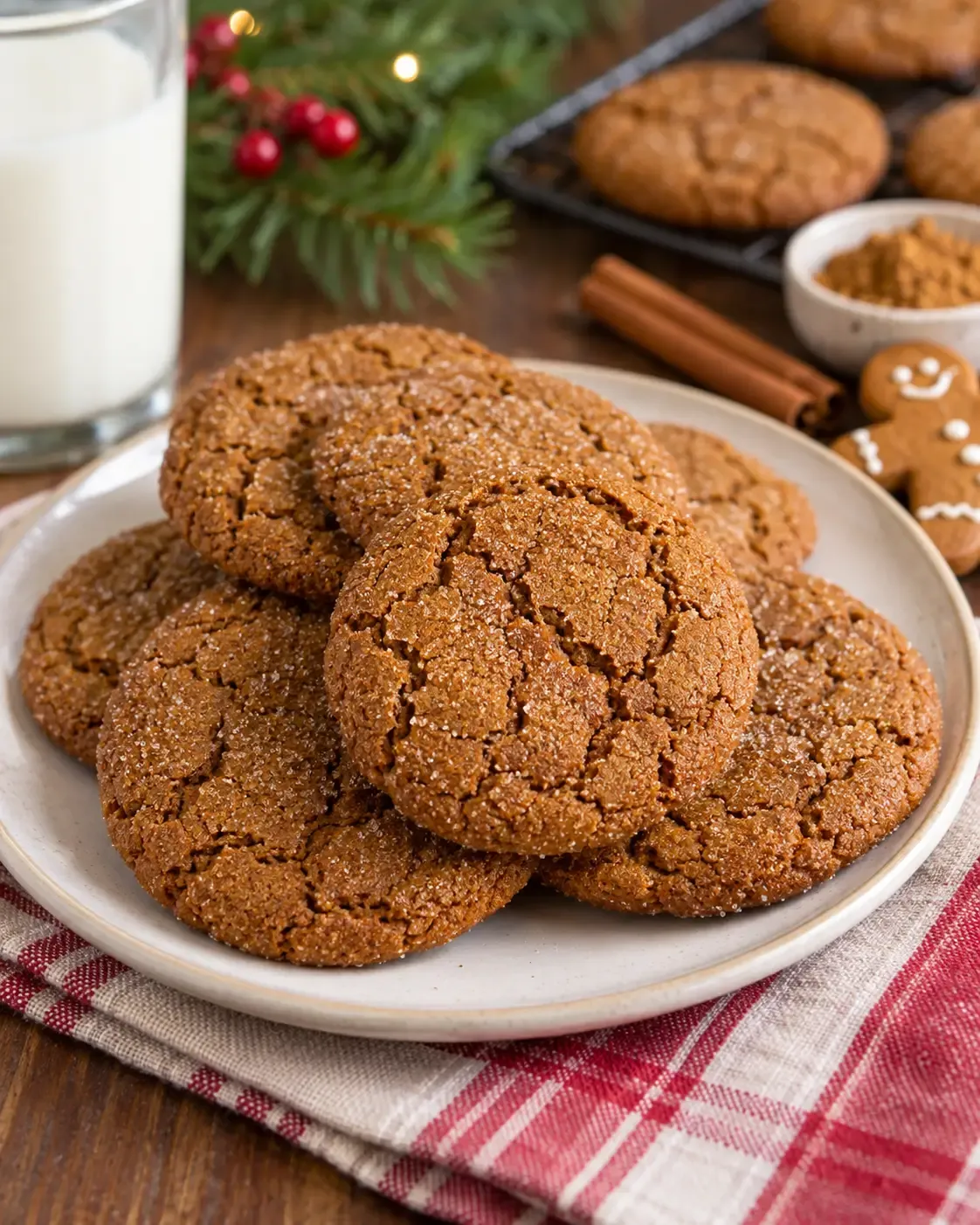
Gingerbread Cookie Recipe
Soft and chewy gingerbread cookies made with molasses, brown sugar and warm spices, rolled and cut into classic shapes.
Contains: Wheat · Milk · Egg
Contains wheat, milk and egg. If you need to avoid additional allergens, check the labels of packaged ingredients such as molasses, vanilla extract and spices because formulations and manufacturing practices can vary.
WHY IT WORKS
Why This Recipe Works
01
Build in Chewiness
Molasses and dark brown sugar hold onto moisture, helping the cookies stay soft in the center while giving them deep gingerbread flavor.
02
Chill Before Rolling
A full chill firms the butter and hydrates the flour, making the dough easier to roll and helping the cut shapes keep their edges.
03
Bake Until Just Set
Removing the cookies when the edges are set but the centers are still soft keeps them from turning crisp as they cool.
WHAT YOU’LL NEED
Equipment
THE RECIPE
Ingredients & Method
Use these cooking tools without leaving the recipe. Change the servings, switch measurements, keep a private note in this browser, and use any timer buttons shown below the method steps.
Ingredient quantities have been scaled. Cooking time, oven temperature, pan size and method timings are unchanged.
My Notes
Ingredients
-
-
Tools
-
-
-
-
-
Tools
-
Tools
-
-
Tools
-
Tools
Method
Tap a step number as you finish it.
Timed steps show a timer button beneath the instruction.
-
In a large bowl, whisk together the flour, baking soda, ginger, cinnamon, cloves and salt until evenly combined.
-
In a separate large bowl, beat the softened butter and dark brown sugar with an electric mixer for about 2 minutes, until smooth and slightly fluffy.
-
Beat in the egg, molasses and vanilla extract until evenly combined, scraping down the bowl as needed.
-
Add the dry ingredients in two additions and mix on low speed just until a soft dough forms. Divide the dough in half, flatten each half into a disk and wrap well.
-
Refrigerate the dough for at least 1 hour, until firm enough to roll cleanly.
-
Heat the oven to 350°F. Line 2 large baking sheets with parchment paper.
-
Roll one chilled dough disk between two sheets of parchment paper to about 1/4 inch thick. Cut into shapes and transfer the cookies to the prepared baking sheets, leaving about 1 inch between them. Gather and reroll the scraps once. Keep the remaining dough chilled until needed.
-
Bake one sheet at a time for 8 to 10 minutes, until the edges are set but the centers still look slightly soft. Start checking at 8 minutes; do not wait for the centers to look dry if you want a soft, chewy texture.
-
Let the cookies cool on the baking sheet for 5 minutes, then transfer them to a wire rack to cool completely.
COOKING GUIDANCE
Practical Cooking Notes
Doneness
For soft and chewy cookies, remove them when the edges are set but the centers still look slightly soft. They will firm as they cool, so avoid waiting for the centers to look dry in the oven.
Make Ahead
Prepare and chill the dough up to 48 hours ahead, keeping it tightly wrapped in the refrigerator. You can also freeze the wrapped dough disks for up to 2 months; thaw them overnight in the refrigerator before rolling.
Recipe tools
Adapt This Recipe
Change the quantities, measurements, pan, cooking method or ingredients, then turn what you need into a shopping list.
Dietary options
Make This Recipe Work for You
Only straightforward swaps are offered automatically. If changing a defining ingredient would effectively create a different dish, that conversion is left out.
Make It Dairy-Free
Change the following ingredient:
Replace3/4 US cup unsalted butter, softened
With3/4 US cup unsalted plant-based butter, softened
Replace170 grams (g) unsalted butter, softened
With170 grams (g) unsalted plant-based butter, softened
Use the same quantity of a plant-based butter suited to cooking or baking as required.
For allergies, intolerances or strict dietary requirements, check the labels of the specific products you use. These swaps do not certify a recipe or ingredient as allergen-free.
Recipe Notes
Ingredient Notes
Use regular unsulphured molasses rather than blackstrap molasses. The dark brown sugar adds extra molasses flavor and moisture, while softened butter should be pliable but not melted or greasy.
Useful Substitutions
Light brown sugar can replace dark brown sugar for a milder flavor. If you prefer a gentler clove note, reduce the ground cloves to 1/8 teaspoon (tsp) rather than removing the ginger or cinnamon.
INGREDIENT QUALITY
Quality Note
Use regular unsulphured molasses rather than blackstrap molasses. Blackstrap is much more bitter and can overpower the warm gingerbread spices.
COOKING TIPS
Tips
Chill the Dough Fully
Warm dough is sticky and spreads more readily. Give it the full chilling time before rolling, and return it to the refrigerator briefly if it becomes too soft while you work.
Roll Between Parchment
Rolling the dough between parchment keeps it from sticking without working extra flour into the cookies, which helps preserve the soft texture.
Reroll Scraps Once
Gather the cut-out scraps gently and reroll them once. Repeated handling warms the butter and can make later cookies tougher or more prone to spreading.
Do Not Overbake
The centers should still look a little soft when the cookies leave the oven. They continue to set on the hot baking sheet during the first few minutes of cooling.
MAKE IT LAST
Storing, Freezing & Reheating
Storing
Once completely cool, keep the cookies in an airtight container at room temperature for up to 5 days. Put parchment between layers if the shapes are delicate.
Freeze Baked Cookies
Freeze fully cooled cookies in an airtight container with parchment between layers for up to 2 months. Thaw them covered at room temperature so condensation forms on the container rather than the cookies.
Freeze the Dough
Wrap the dough disks tightly and freeze for up to 2 months. Thaw them overnight in the refrigerator, then roll and bake as directed while the dough is still cold.
Warm a Cookie
For a softer just-baked feel, microwave one room-temperature cookie for about 5 to 8 seconds. Let it stand briefly before eating because the center can become hot quickly.
ESTIMATED PER SERVING
Nutrition
1 cookie
Nutrition information is an estimate. Where shown, % Daily Value uses standard US Daily Values for adults and children aged 4+; actual values vary with ingredient brands, exact quantities and portion size.
QUESTIONS
Gingerbread Cookie FAQs
Why does gingerbread cookie dough need to chill?
Chilling firms the butter and makes the dough easier to roll and cut. It also helps the cookies spread less so the shapes stay more defined in the oven.
Can I make the dough ahead of time?
Yes. Keep the wrapped dough in the refrigerator for up to 48 hours, or freeze the dough disks for up to 2 months and thaw them overnight in the refrigerator before rolling.
Can I use blackstrap molasses?
Regular unsulphured molasses is the better choice here. Blackstrap molasses is much more bitter and less sweet, so it can make the finished cookies taste harsher than intended.
How do I keep gingerbread cookies soft and chewy?
Roll the dough evenly, avoid adding extra flour, and take the cookies out when the edges are set but the centers are still slightly soft. Store them airtight once completely cool.
What if I do not have shaped cookie cutters?
You can use a plain round biscuit cutter or the rim of a small glass. Keep the dough about 1/4 inch thick so the baking time and soft texture stay close to the recipe.

Looking for Something Else to Cook?
Browse more SinOrSlim recipes or use the recipe tools to adapt what you already have.