
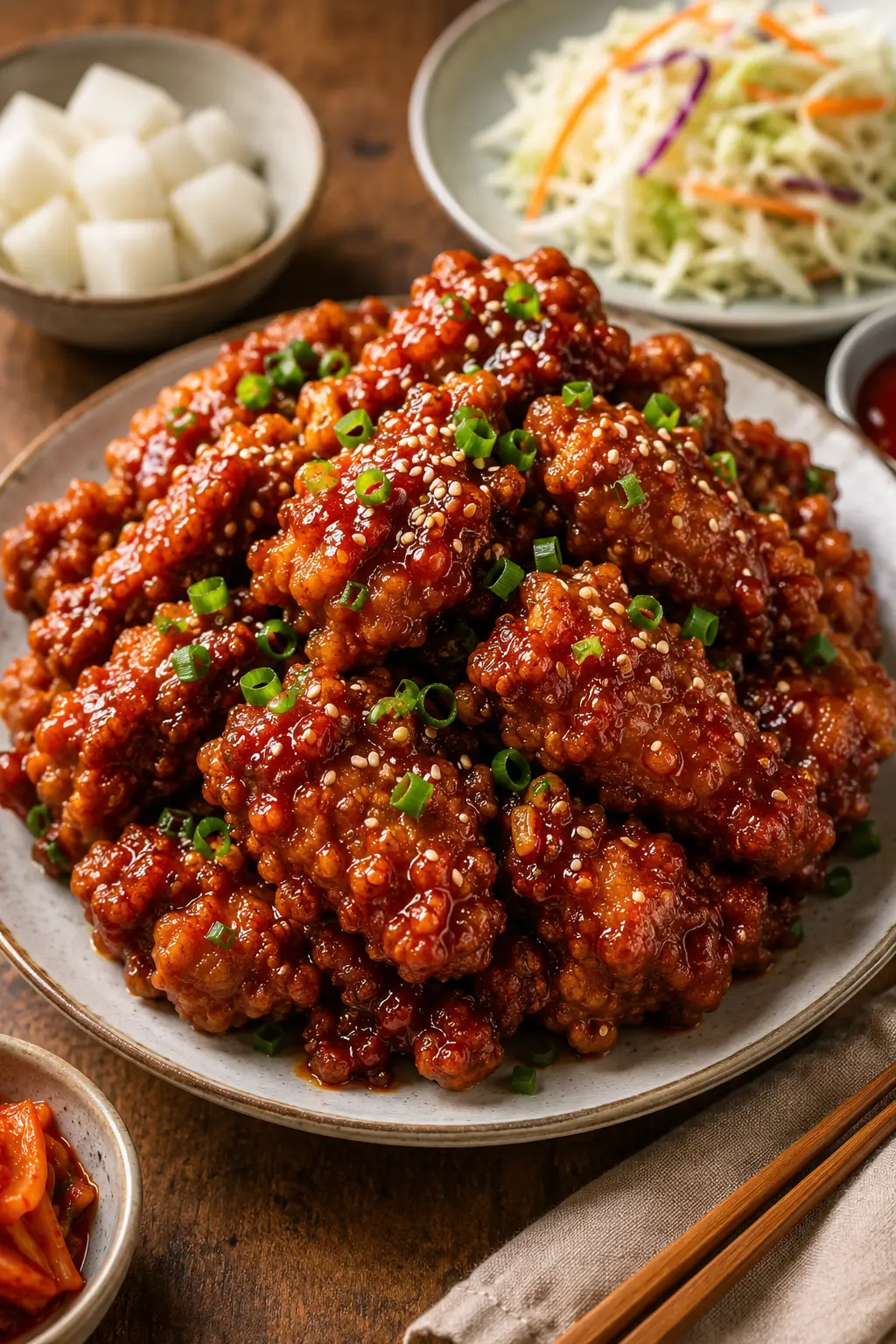
Korean Fried Chicken Recipe
Crispy double-fried chicken wings tossed in a sticky sweet-savory gochujang glaze and finished with sesame seeds and scallions.
Contains: Soy · Wheat · Sesame
Gochujang and soy sauce formulations vary. Check the labels of the products you use, especially if you need to avoid wheat, soy or other allergens.
WHY IT WORKS
Why This Recipe Works
01
Double-Fry for Crunch
A lower-temperature first fry cooks the wings and sets the coating; a short, hotter second fry makes the crust crisp and craggy.
02
Use a Light Starch Coating
Potato starch and cornstarch form a thin, dry coating that fries crisp without turning heavy or bready.
03
Glaze at the End
Tossing the wings with the warm gochujang sauce only after the second fry helps preserve the crisp shell under the sticky glaze.
WHAT YOU’LL NEED
Equipment
THE RECIPE
Ingredients & Method
Use these cooking tools without leaving the recipe. Change the servings, switch measurements, keep a private note in this browser, and use any timer buttons shown below the method steps.
Ingredient quantities have been scaled. Cooking time, oven temperature, pan size and method timings are unchanged.
My Notes
Ingredients
- Chicken
-
-
-
-
-
-
Tools
-
Tools
-
- Sauce
-
-
-
Tools
-
-
Tools
-
-
-
- To Finish
-
-
Method
Tap a step number as you finish it.
Timed steps show a timer button beneath the instruction.
-
Pat the chicken wings very dry with paper towels. Put them in a large bowl, add the salt, black pepper and ginger, and toss until evenly seasoned.
-
For the sauce, combine the gochujang, ketchup, brown sugar, rice vinegar, soy sauce, water, garlic and sesame oil in a small saucepan. Set aside while you fry the chicken.
-
Pour enough neutral oil into a large heavy-bottomed pot to reach about 2 inches deep, without filling the pot more than one-third full. Heat the oil to 325°F over medium heat. Set a wire rack over a rimmed baking sheet nearby.
-
Combine the potato starch, cornstarch and baking powder. Add the mixture to the chicken and toss until every piece has a thin, dry, even coating. Shake off any heavy excess.
-
Working in batches, lower the chicken carefully into the 325°F oil. Fry for about 7 to 8 minutes, turning occasionally, until the coating is set and the chicken is mostly cooked. Transfer to the rack and let the oil return to temperature before frying the next batch.
-
Increase the oil temperature to 375°F. Fry the chicken again in batches for 2 to 3 minutes, until deeply crisp and the thickest pieces reach at least 165°F without the thermometer touching bone. Return the chicken to the rack.
-
Put the saucepan over medium heat and bring the sauce to a gentle simmer. Cook for about 2 to 3 minutes, stirring often, until glossy and slightly thickened. Remove from the heat.
-
Transfer the hot chicken to a large clean bowl. Pour over the warm sauce and toss just until evenly coated. Sprinkle with sesame seeds and scallions and serve immediately.
COOKING GUIDANCE
Practical Cooking Notes
Doneness
165°F / 74°C
Check the thickest wing without touching the bone and cook until it reaches at least 165°F. The coating should be deeply crisp after the second fry; do not rely on color alone for chicken doneness.
Make Ahead
Make the sauce up to 3 days ahead, cool it, cover it and refrigerate it. Reheat it gently before serving. For the crispiest chicken, dry, coat and fry the wings just before you plan to eat.
Recipe tools
Adapt This Recipe
Change the quantities, measurements, pan, cooking method or ingredients, then turn what you need into a shopping list.
Dietary options
Make This Recipe Work for You
Only straightforward swaps are offered automatically. If changing a defining ingredient would effectively create a different dish, that conversion is left out.
Make It Gluten-Free
Change the following ingredient:
Replace2 tablespoons (tbsp) soy sauce
With2 tablespoons (tbsp) gluten-free tamari
Replace30 millilitres (ml) soy sauce
With30 millilitres (ml) gluten-free tamari
Use gluten-free tamari in the same quantity and check the label.
For allergies, intolerances or strict dietary requirements, check the labels of the specific products you use. These swaps do not certify a recipe or ingredient as allergen-free.
Recipe Notes
Ingredient Notes
Dry chicken is essential for a crisp coating, so blot the wings thoroughly before seasoning. Gochujang varies in heat and saltiness by brand; taste the finished sauce before coating the chicken and adjust only if needed.
Useful Substitutions
If potato starch is unavailable, replace it with the same amount of cornstarch. You can also use all drumettes or all flats instead of a mixed batch; pieces of similar size will cook more evenly.
INGREDIENT QUALITY
Quality Note
Keep the oil temperature steady with a deep-fry thermometer and fry in batches so the pot does not become overcrowded. The second, hotter fry is what gives the coating its lasting crunch.
SPEND LESS
Cost-Saving Tip
Whole chicken wings can cost less than pre-separated pieces. Split them at the joints yourself and freeze the wing tips for homemade stock.
COOKING TIPS
Tips
Dry the Wings Well
Surface moisture works against crispness. Blot the wings thoroughly before seasoning and add the starch coating only when the oil is nearly ready.
Coat Lightly
Toss until the wings have a thin, even dusty coating. Heavy clumps of starch can fry unevenly and make the crust thicker than intended.
Fry in Batches
Crowding drops the oil temperature and encourages greasy coating. Leave enough room for the wings to move freely and let the oil recover between batches.
Sauce Just Before Serving
The glaze softens the crust over time, so toss the wings only when you are ready to serve them and coat them lightly rather than letting them sit in sauce.
MAKE IT LAST
Storing, Freezing & Reheating
Storing
Refrigerate leftover chicken within 2 hours in a covered container and use it within 3 to 4 days. Store any extra sauce separately when possible.
Freezing
Freeze fully cooled fried chicken in a single layer before transferring it to an airtight container or freezer bag. For best quality, use within about 2 months and thaw overnight in the refrigerator.
Reheat in the Oven
Arrange the chicken on a wire rack over a baking sheet and reheat at 375°F until hot and crisp, with the thickest pieces reaching 165°F. Add reserved sauce after reheating if you stored it separately.
Reheat in the Microwave
Microwave in short intervals until the chicken reaches 165°F. The coating will soften, so the oven is the better choice when crispness matters.
ESTIMATED PER SERVING
Nutrition
1 of 4 servings
Nutrition information is an estimate. Where shown, % Daily Value uses standard US Daily Values for adults and children aged 4+; actual values vary with ingredient brands, exact quantities and portion size.
QUESTIONS
Korean Fried Chicken FAQs
Why is Korean fried chicken fried twice?
The first fry cooks the chicken and sets the starch coating. The second, hotter fry drives off more surface moisture and gives the wings a crisp shell that holds up better once sauced.
What temperature should the frying oil be?
Use 325°F for the first fry and 375°F for the second fry. Let the oil return to the target temperature between batches so the coating fries rather than absorbing excess oil.
Can I use cornstarch instead of potato starch?
Yes. Replace the potato starch with the same amount of cornstarch. The crust will still be crisp, although potato starch gives the coating a slightly lighter, more brittle texture.
How spicy is this Korean fried chicken?
The glaze has a noticeable but balanced gochujang heat alongside sweetness and tang. Gochujang varies by brand, so the exact heat level will vary too.
Can I make Korean fried chicken ahead of time?
The sauce can be made up to 3 days ahead and refrigerated. Fry the chicken close to serving time for the best texture, then reheat the sauce and toss everything together just before serving.
Looking for Something Else to Cook?
Browse more SinOrSlim recipes or use the recipe tools to adapt what you already have.