
Pesto Recipe
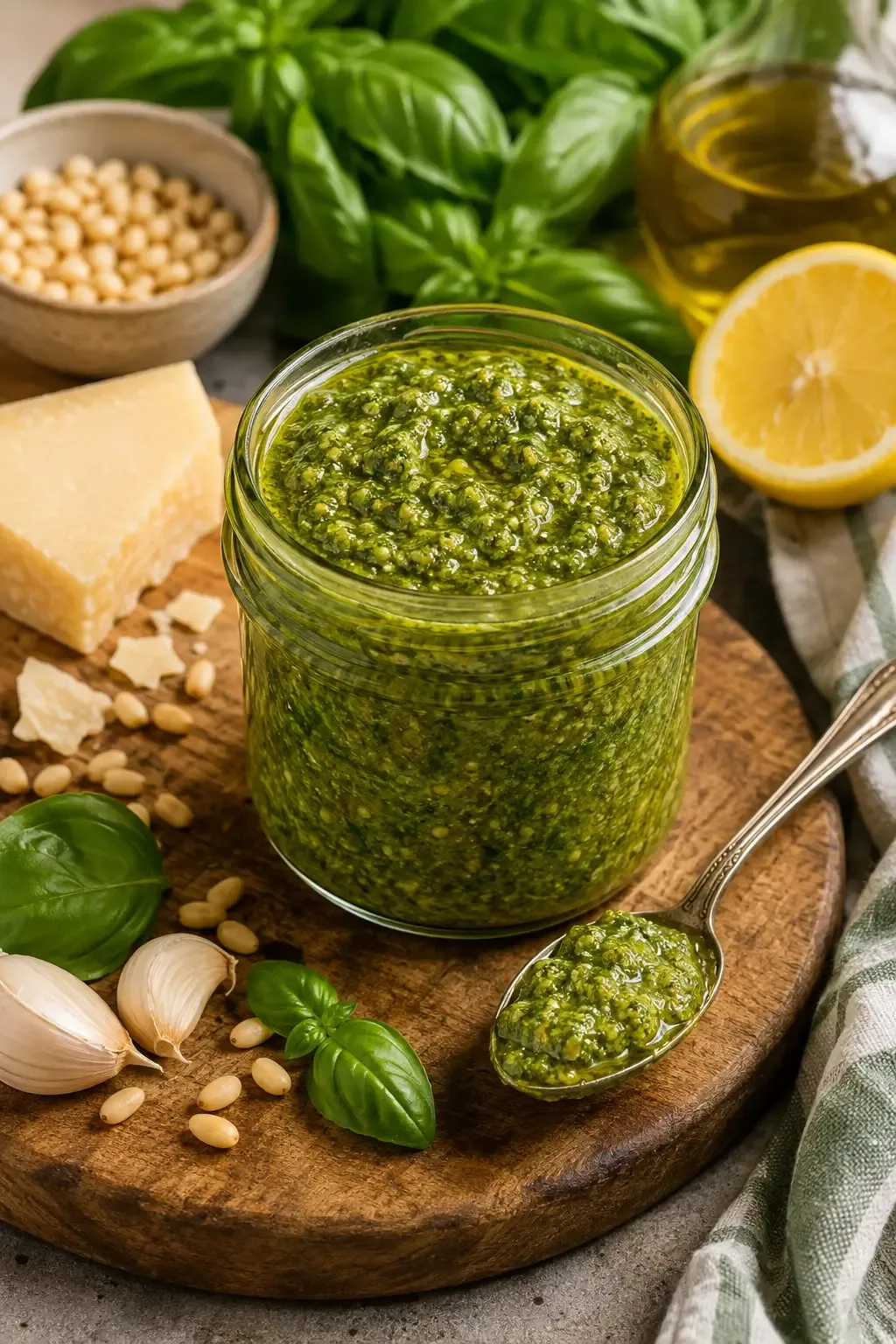
Fresh basil pesto with Parmesan, pine nuts, garlic and extra-virgin olive oil, blended into a thick, spoonable sauce.
Contains: Milk · Tree Nuts
Contains milk and pine nuts. Readers with food allergies should check the labels of the cheese and any packaged ingredients they use.
WHY IT WORKS
Why This Recipe Works
01
Fresh Basil First
A generous amount of fresh basil gives the pesto its defining flavor and keeps the finished sauce bright and herb-forward.
02
Pulse for Texture
Short pulses chop the basil, pine nuts, cheese and garlic evenly without turning the pesto into a completely smooth puree.
03
Add the Oil Gradually
Drizzling in the olive oil gradually makes it easier to stop when the pesto reaches a thick, spoonable consistency.
WHAT YOU’LL NEED
Equipment
THE RECIPE
Ingredients & Method
Use these cooking tools without leaving the recipe. Change the servings, switch measurements, keep a private note in this browser, and use any timer buttons shown below the method steps.
Ingredient quantities have been scaled. Cooking time, oven temperature, pan size and method timings are unchanged.
My Notes
Ingredients
Method
Tap a step number as you finish it.
Timed steps show a timer button beneath the instruction.
-
Add the basil, pine nuts, Parmesan, garlic and salt to a food processor. Pulse in short bursts until everything is finely chopped, stopping to scrape down the bowl as needed.
-
With the processor running on low, drizzle in the olive oil gradually. Stop and scrape down the bowl, then pulse just until the pesto is thick, cohesive and still lightly textured.
-
Taste and add a little more salt if needed. Use immediately, or transfer to an airtight container and refrigerate promptly.
COOKING GUIDANCE
Practical Cooking Notes
Make Ahead
Make the pesto up to 3 days ahead. Transfer it to an airtight container, reduce air contact at the surface and refrigerate promptly. Stir before serving and keep it chilled until needed.
Recipe tools
Adapt This Recipe
Change the quantities, measurements, pan, cooking method or ingredients, then turn what you need into a shopping list.
Dietary options
Make This Recipe Work for You
Only straightforward swaps are offered automatically. If changing a defining ingredient would effectively create a different dish, that conversion is left out.
For allergies, intolerances or strict dietary requirements, check the labels of the specific products you use. These swaps do not certify a recipe or ingredient as allergen-free.
Recipe Notes
Ingredient Notes
Dry the basil leaves thoroughly after washing so excess water does not thin the pesto. Finely grated Parmesan blends in more evenly, while pine nuts give the sauce its mild, creamy nuttiness.
Useful Substitutions
Walnuts can replace the pine nuts in the same volume for a less expensive, more robust pesto. Pecorino Romano can replace some or all of the Parmesan for a sharper, saltier finish.
INGREDIENT QUALITY
Quality Note
Use fresh, dry basil leaves and process the pesto with short pulses rather than running the food processor continuously. This helps preserve a fresh basil flavor and a lightly textured consistency.
SPEND LESS
Cost-Saving Tip
Pine nuts can be expensive and turn rancid relatively quickly. If a larger bag is better value, keep the unused pine nuts tightly sealed in the freezer for future batches rather than replacing the defining nut in this pesto.
COOKING TIPS
Tips
Dry the Basil
After washing, dry the leaves well before blending. Excess water can make pesto thinner and dull the concentrated basil flavor.
Pulse, Don’t Puree
Use short pulses and scrape down the bowl as needed. A little texture keeps the pesto from becoming dense and pasty.
Add Oil Gradually
Drizzle in the olive oil rather than adding it all at once so you can control the final consistency more easily.
Season at the End
Parmesan adds saltiness of its own, so taste the finished pesto before adding extra salt.
MAKE IT LAST
Storing & Freezing
Storing
Transfer the pesto to an airtight container and refrigerate promptly. For best quality, use it within 3 to 4 days and keep it chilled rather than storing it at room temperature.
Limit Browning
Smooth the surface and press food-safe wrap directly against the pesto before sealing the container. Reducing contact with air helps slow surface darkening.
Freezing
Freeze pesto in small airtight portions for up to about 3 months. Thaw only what you need in the refrigerator and stir well before using.
ESTIMATED PER SERVING
Nutrition
2 tablespoons (tbsp)
Nutrition information is an estimate. Where shown, % Daily Value uses standard US Daily Values for adults and children aged 4+; actual values vary with ingredient brands, exact quantities and portion size.
QUESTIONS
Pesto FAQs
Can I make pesto without a food processor?
Yes. A mortar and pestle gives excellent texture, or you can finely chop the basil, pine nuts and garlic by hand before stirring in the Parmesan and olive oil.
Why did my pesto turn dark?
Fresh basil darkens as it is exposed to air. Work fairly quickly, refrigerate the finished pesto promptly and reduce air contact in the storage container. Some surface darkening is normal.
Can I use walnuts instead of pine nuts?
Yes. Use the same volume of walnuts. The pesto will have a stronger, slightly more earthy nut flavor, but the texture and method remain similar.
How thick should homemade pesto be?
It should be thick enough to mound slightly on a spoon but loose enough to stir easily. Add the olive oil gradually so you can stop at the consistency you prefer.
Can I freeze pesto?
Yes. Freeze it in small airtight portions so you can thaw only what you need. Thaw in the refrigerator and stir before serving.

Looking for Something Else to Cook?
Browse more SinOrSlim recipes or use the recipe tools to adapt what you already have.