
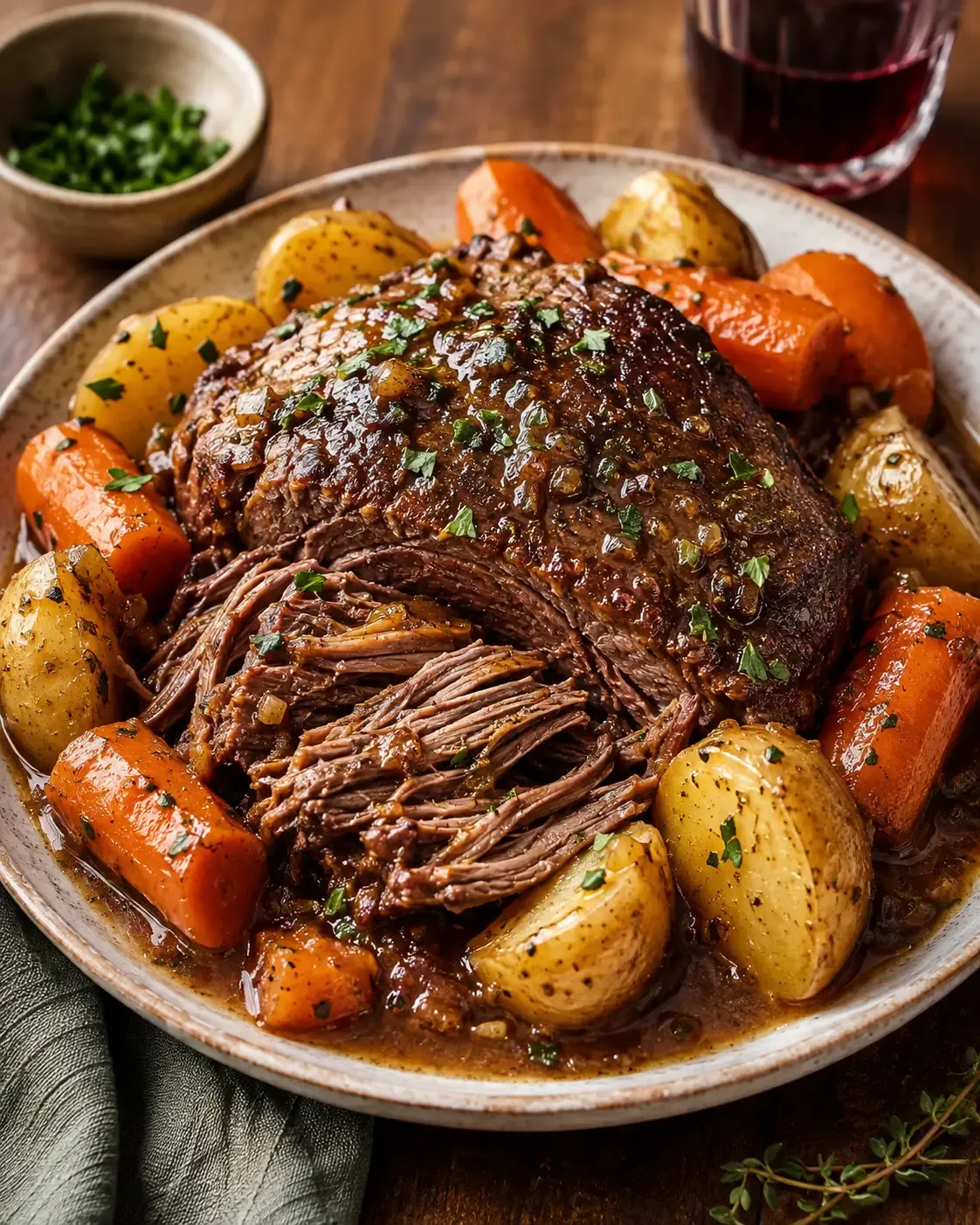
Pot Roast Recipe
Tender slow-cooked beef chuck with carrots and potatoes in a savory onion and herb braising liquid.
Contains: Milk · Wheat
This recipe contains milk and wheat from the butter and all-purpose flour. Check the label of the beef broth if you are cooking for an allergy or intolerance because formulations vary.
WHY IT WORKS
Why This Recipe Works
01
Use a Braising Cut
Chuck roast has enough marbling and connective tissue to become tender and succulent during a long, covered braise.
02
Brown Before Braising
Searing the beef first builds a deep savory base, while the onion, tomato paste and broth turn the browned bits into a rich cooking liquid.
03
Add the Vegetables Later
Carrots and potatoes go in after the beef has had a head start, so they become tender without spending the full braising time in the pot.
WHAT YOU’LL NEED
Equipment
THE RECIPE
Ingredients & Method
Use these cooking tools without leaving the recipe. Change the servings, switch measurements, keep a private note in this browser, and use any timer buttons shown below the method steps.
Ingredient quantities have been scaled. Cooking time, oven temperature, pan size and method timings are unchanged.
My Notes
Ingredients
-
-
-
-
-
-
Tools
-
-
-
Tools
-
-
-
-
-
-
Method
Tap a step number as you finish it.
Timed steps show a timer button beneath the instruction.
-
Heat the oven to 300°F. Pat the beef dry with paper towels, then season it all over with the kosher salt and black pepper. Sprinkle the flour over the roast and rub it into a thin, even coating, shaking off any excess.
-
Heat the olive oil and butter in a 6- to 7-quart Dutch oven over medium-high heat. Sear the beef for about 4 to 5 minutes on each broad side, then brown the edges briefly. Transfer the roast to a plate.
-
Reduce the heat to medium. Add the onion and cook for about 4 to 5 minutes, until it begins to soften. Add the garlic and tomato paste and cook for 1 minute. Pour in the beef broth and scrape up the browned bits from the bottom of the pot.
-
Return the beef and any collected juices to the pot. Add the thyme, rosemary and bay leaves. Bring the liquid to a gentle simmer, then cover the Dutch oven with its lid.
-
Transfer the covered pot to the oven and braise for 2 hours and 15 minutes.
-
Add the carrots and potatoes around the roast, keeping them partly in the braising liquid. Cover and return to the oven for 60 to 90 minutes, until the vegetables are tender and a fork twists easily into the beef. If the roast still feels firm, continue braising in 20- to 30-minute increments.
-
Transfer the beef to a cutting board and let it rest for 15 minutes. Remove and discard the bay leaves, then skim excess fat from the surface of the braising liquid.
-
If you want a slightly more concentrated cooking liquid, simmer it uncovered on the stovetop for 5 to 10 minutes. Slice the beef across the grain or pull it into large pieces, then serve with the carrots, potatoes and braising juices.
COOKING GUIDANCE
Practical Cooking Notes
Doneness
The roast is ready when a fork twists into the thickest part with little resistance and the beef can be pulled into large tender pieces. If it still feels firm, keep braising and check again after 20 to 30 minutes.
Make Ahead
Cook the pot roast up to 2 days ahead, cool it promptly in its braising liquid and refrigerate it covered. Reheat gently until the beef reaches 165°F; chilling also makes it easy to lift off any hardened fat before reheating.
Recipe tools
Adapt This Recipe
Change the quantities, measurements, pan, cooking method or ingredients, then turn what you need into a shopping list.
Dietary options
Make This Recipe Work for You
Only straightforward swaps are offered automatically. If changing a defining ingredient would effectively create a different dish, that conversion is left out.
Make It Dairy-Free
Change the following ingredient:
Replace1 tablespoon (tbsp) unsalted butter
With1 tablespoon (tbsp) unsalted plant-based butter
Replace14 grams (g) unsalted butter
With14 grams (g) unsalted plant-based butter
Use the same quantity of a plant-based butter suited to cooking or baking as required.
Make It Gluten-Free
Change the following ingredient:
Replace2 tablespoons (tbsp) all-purpose flour
With2 tablespoons (tbsp) gluten-free all-purpose flour blend
Replace16 grams (g) plain flour
With16 grams (g) gluten-free all-purpose flour blend
For a coating, roux or modest thickening amount, use a one-for-one gluten-free all-purpose flour blend intended for cooking.
For allergies, intolerances or strict dietary requirements, check the labels of the specific products you use. These swaps do not certify a recipe or ingredient as allergen-free.
Recipe Notes
Ingredient Notes
Beef chuck is the best fit for this slow braise because its marbling and connective tissue soften during the long cook. Cut the carrots into large pieces and use small Yukon Gold potatoes, or halve larger ones, so the vegetables hold their shape.
Useful Substitutions
Boneless beef shoulder or blade roast can replace chuck if it has good marbling. Small red potatoes can replace Yukon Gold potatoes, and some of the carrots can be replaced with parsnips without changing the braising method.
INGREDIENT QUALITY
Quality Note
Choose a well-marbled beef chuck roast and judge doneness by tenderness rather than the clock alone. If the roast is still firm when pierced with a fork, keep it covered and continue braising until it yields easily.
SPEND LESS
Cost-Saving Tip
Chuck roast is often better value in larger packs or when sold as a larger joint. If the price per pound is lower, portion and freeze the extra beef for another pot roast or braised beef meal.
COOKING TIPS
Tips
Dry the Beef Well
Pat the roast dry before seasoning and searing. A dry surface browns more readily and helps build the savory flavor at the base of the braising liquid.
Do Not Rush the Braise
If the roast is still firm when pierced with a fork, it needs more time. Keep it covered and continue braising in 20- to 30-minute increments until tender.
Keep the Vegetables Chunky
Large carrot pieces and halved or quartered potatoes are less likely to break down while the beef finishes cooking.
Rest Before Serving
Rest the beef for 15 minutes before slicing or pulling it into large pieces. This also gives you time to skim the braising liquid and reduce it if needed.
MAKE IT LAST
Storing, Freezing & Reheating
Storing
Refrigerate the beef, vegetables and cooking liquid within 2 hours in covered, shallow containers and use them within 3 to 4 days.
Freezing
Freeze cooled pot roast with some of its braising liquid in airtight portions for up to about 3 months. For the best texture, freeze the potatoes separately or leave them out of frozen portions, then thaw overnight in the refrigerator.
Reheat in the Oven
Put the beef and vegetables in a covered baking dish with some braising liquid and warm at 325°F until the beef reaches 165°F and the vegetables are hot throughout.
Reheat in the Microwave
Place a portion in a microwave-safe dish with a spoonful of braising liquid, cover loosely and heat in short intervals until the beef reaches 165°F and everything is hot throughout.
ESTIMATED PER SERVING
Nutrition
1 of 8 servings
Nutrition information is an estimate. Where shown, % Daily Value uses standard US Daily Values for adults and children aged 4+; actual values vary with ingredient brands, exact quantities and portion size.
QUESTIONS
Pot Roast FAQs
What is the best cut of beef for pot roast?
Beef chuck roast is a reliable choice because it has enough marbling and connective tissue to become tender during a long, moist braise. Shoulder or blade roast can also work if well marbled.
Why is my pot roast still tough?
Pot roast becomes tender with time rather than at a precise clock time. If a fork does not twist easily into the meat, cover the pot and continue braising for another 20 to 30 minutes before checking again.
When should I add carrots and potatoes to pot roast?
Add them after the beef has braised for about 2 hours and 15 minutes. This gives the roast a head start while still allowing the vegetables enough time to become tender.
Do I have to sear the beef first?
The roast will still cook if you skip searing, but browning the beef first adds deeper savory flavor to both the meat and the braising liquid. It is worth doing when time allows.
Can I make pot roast ahead of time?
Yes. Pot roast reheats well and is convenient to cook a day ahead. Cool it promptly in its cooking liquid, refrigerate it, then remove any hardened fat and reheat gently until the beef reaches 165°F.

Looking for Something Else to Cook?
Browse more SinOrSlim recipes or use the recipe tools to adapt what you already have.