
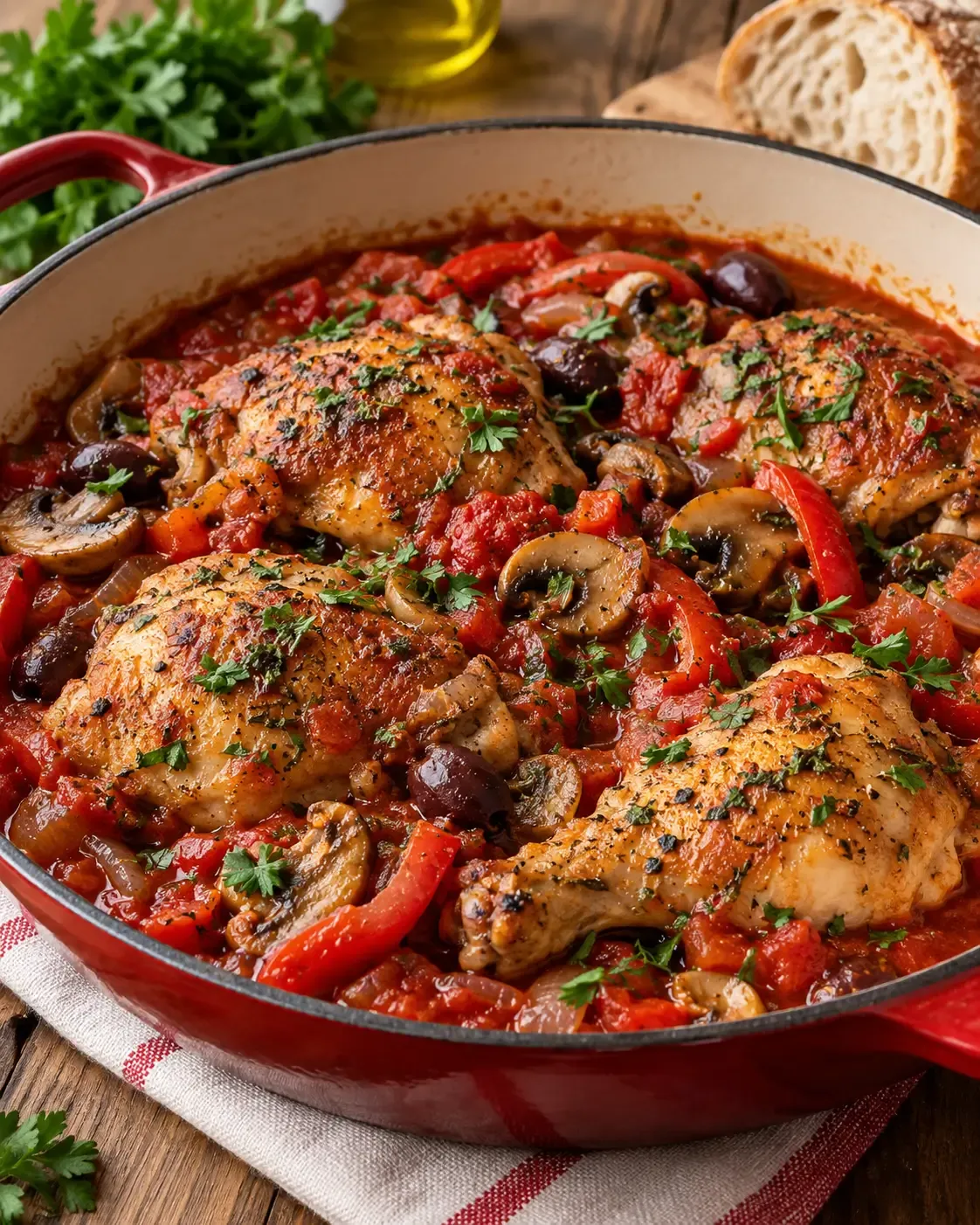
Chicken Cacciatore Recipe
Classic chicken cacciatore with browned chicken thighs simmered in a tomato sauce with peppers, mushrooms, herbs and olives.
Use chicken broth or stock labeled gluten-free to support the Gluten-Free classification, and check packaged ingredient labels if you need to avoid specific allergens.
WHY IT WORKS
Why This Recipe Works
01
Brown the Chicken
Browning the chicken skin-side down first builds savory flavor and leaves useful rendered fat for the vegetables and sauce.
02
Build the Sauce in Layers
Cooking the onion, pepper and mushrooms before adding wine and tomatoes concentrates their flavor instead of diluting the finished sauce.
03
Braise Gently
A covered simmer cooks the chicken through without rushing it, while a final uncovered simmer thickens the tomato sauce around the meat.
WHAT YOU’LL NEED
Equipment
THE RECIPE
Ingredients & Method
Use these cooking tools without leaving the recipe. Change the servings, switch measurements, keep a private note in this browser, and use any timer buttons shown below the method steps.
Ingredient quantities have been scaled. Cooking time, oven temperature, pan size and method timings are unchanged.
My Notes
Ingredients
Method
Tap a step number as you finish it.
Timed steps show a timer button beneath the instruction.
-
Pat the chicken thighs dry with paper towels. Season them all over with the kosher salt and black pepper.
-
Heat the olive oil in a large Dutch oven or deep skillet over medium-high heat. Add the chicken skin-side down and cook for 5 to 7 minutes, until well browned. Turn and cook the second side for about 3 minutes, then transfer the chicken to a plate.
-
Reduce the heat to medium. Add the onion and bell pepper to the pot and cook for about 5 minutes, stirring occasionally, until they begin to soften.
-
Add the mushrooms and cook for about 5 minutes, until they have softened and released some of their moisture. Stir in the garlic and cook for about 30 seconds.
-
Pour in the red wine and scrape up the browned bits from the bottom of the pot. Simmer for about 2 minutes, until the wine has reduced slightly.
-
Stir in the crushed tomatoes, chicken broth, oregano, thyme and bay leaf. Return the chicken to the pot skin-side up, along with any juices from the plate, and bring the sauce to a gentle simmer.
-
Cover, reduce the heat to medium-low and simmer gently for 25 minutes.
-
Uncover and simmer for another 10 to 15 minutes, until the sauce has thickened and the chicken reaches at least 165°F in the thickest part without touching the bone. Stir in the olives for the final 5 minutes. Remove the bay leaf, sprinkle with parsley and serve.
COOKING GUIDANCE
Practical Cooking Notes
Doneness
165°F / 74°C
Check the thickest part of a thigh without touching the bone. Chicken is safe at 165°F; thighs may cook somewhat higher and should feel tender when pierced.
Make Ahead
Cook the chicken cacciatore fully up to 1 day ahead, cool it promptly, cover and refrigerate. Reheat gently on the stovetop until the chicken reaches 165°F and the sauce is hot throughout.
Recipe tools
Adapt This Recipe
Change the quantities, measurements, pan, cooking method or ingredients, then turn what you need into a shopping list.
Dietary options
Make This Recipe Work for You
Only straightforward swaps are offered automatically. If changing a defining ingredient would effectively create a different dish, that conversion is left out.
For allergies, intolerances or strict dietary requirements, check the labels of the specific products you use. These swaps do not certify a recipe or ingredient as allergen-free.
Recipe Notes
Ingredient Notes
Bone-in, skin-on chicken thighs hold up well to braising and stay moist as the sauce cooks. Pat them dry before seasoning so they brown rather than steam, then keep them skin-side up once they return to the sauce.
Useful Substitutions
Boneless chicken thighs can be used, but begin checking them earlier because they cook faster. For an alcohol-free version, replace the red wine with the same amount of chicken broth and stir in 1 tablespoon (tbsp) red wine vinegar near the end for acidity.
INGREDIENT QUALITY
Quality Note
Pat the chicken thighs thoroughly dry before seasoning and browning. Good surface contact develops deeper flavor, while bone-in thighs remain moist during the gentle braise.
SPEND LESS
Cost-Saving Tip
Bone-in chicken thighs are well suited to this braise and are often sold in larger packs. Freeze any extra thighs in recipe-sized portions rather than buying a more expensive cut solely for this dish.
COOKING TIPS
Tips
Brown in Batches if Needed
Give the chicken enough space to make good contact with the pot. If your pan is crowded, brown the thighs in two batches rather than letting them steam.
Build the Sauce in Layers
After the chicken is browned, use the rendered fat to soften the onion and pepper and then cook the mushrooms until they lose some of their moisture.
Keep the Simmer Gentle
Once the chicken goes back into the sauce, keep it at a gentle simmer rather than a hard boil so the meat stays tender and the sauce reduces evenly.
Finish Uncovered
Remove the lid for the final part of cooking so excess moisture can evaporate. The sauce should coat a spoon rather than look thin or watery.
MAKE IT LAST
Storing, Freezing & Reheating
Storing
Refrigerate chicken cacciatore within 2 hours in a covered, shallow container and use it within 3 to 4 days.
Freezing
Once cooled, portion the chicken with enough sauce to cover it and freeze in airtight containers. For best quality, use within about 3 months and thaw overnight in the refrigerator.
Reheat in the Oven
Place the chicken and sauce in a covered baking dish and warm at 325°F until the chicken reaches 165°F and the sauce is bubbling gently.
Reheat in the Microwave
Put one portion in a microwave-safe dish, cover loosely and heat in short intervals, stirring the sauce between intervals, until the chicken reaches 165°F throughout.
ESTIMATED PER SERVING
Nutrition
1 chicken thigh with sauce
Nutrition information is an estimate. Where shown, % Daily Value uses standard US Daily Values for adults and children aged 4+; actual values vary with ingredient brands, exact quantities and portion size.
QUESTIONS
Chicken Cacciatore FAQs
What is chicken cacciatore?
Chicken cacciatore is a rustic chicken dish braised with vegetables, herbs and a tomato-based sauce. This version uses chicken thighs, onion, bell pepper, mushrooms, red wine, tomatoes and olives.
What cut of chicken works best for cacciatore?
Bone-in chicken thighs are especially useful because they stay tender during braising. Cook them to at least 165°F in the thickest part without touching the bone; thighs can remain juicy at somewhat higher temperatures.
Can I make chicken cacciatore without wine?
Yes. Replace the red wine with the same amount of chicken broth. Adding a little red wine vinegar near the end restores some of the acidity that wine would otherwise provide.
Should the chicken skin stay crisp?
The skin is browned for flavor, but it will soften somewhat as the chicken braises in the sauce. Keeping the thighs skin-side up and finishing the sauce uncovered helps prevent it from becoming overly soggy.
Can I make chicken cacciatore ahead of time?
Yes. Chicken cacciatore reheats well and can be cooked a day ahead. Cool it promptly, refrigerate it covered, then reheat gently until the chicken reaches 165°F and the sauce is hot throughout.


Looking for Something Else to Cook?
Browse more SinOrSlim recipes or use the recipe tools to adapt what you already have.