
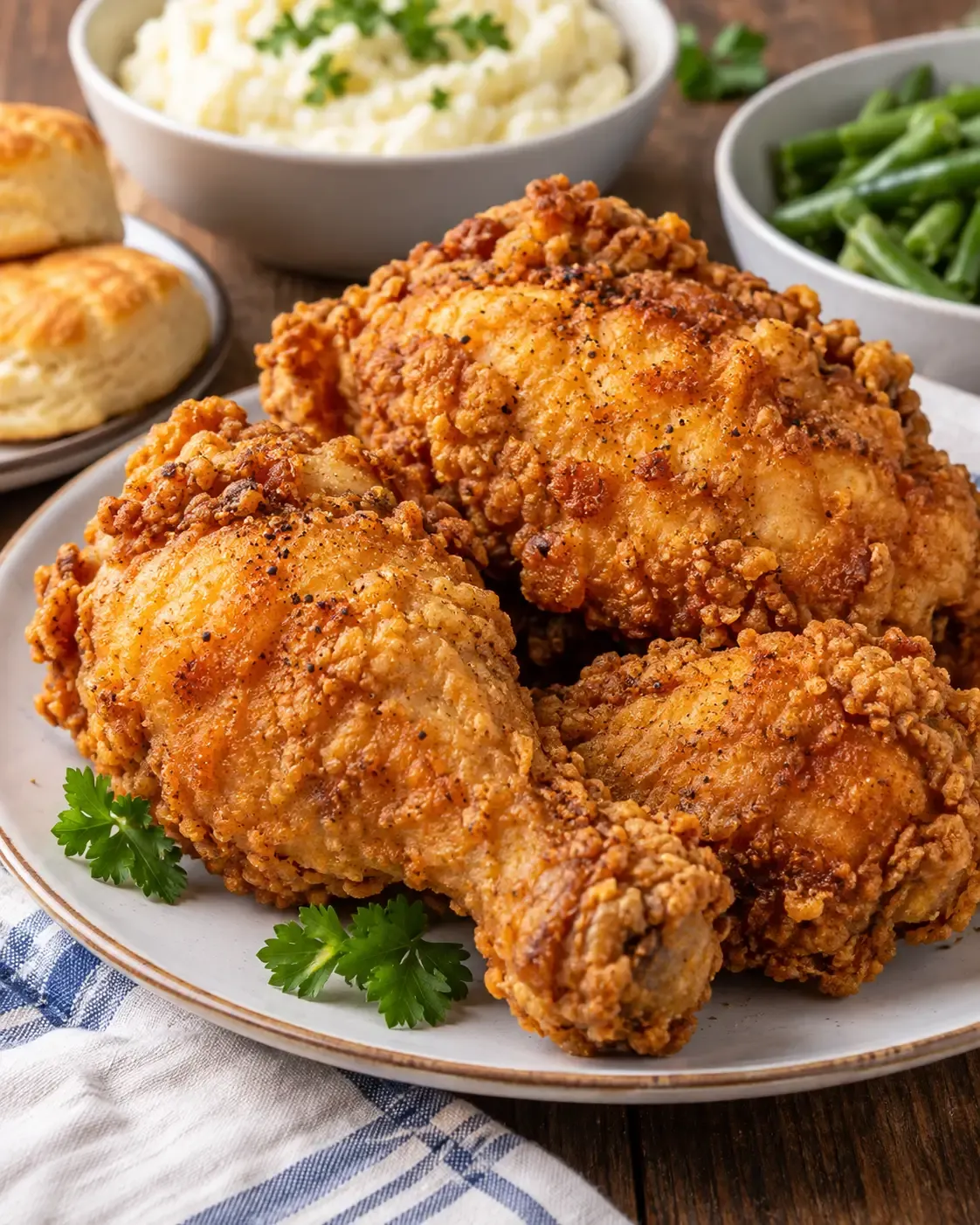
Fried Chicken Recipe
Crispy golden fried chicken with juicy bone-in pieces, a tangy buttermilk soak and a well-seasoned craggy crust.
Contains: Milk · Wheat
Contains milk and wheat. Check the labels of the ingredients you use if you are cooking for someone with a food allergy.
WHY IT WORKS
Why This Recipe Works
01
Buttermilk Soak
A seasoned buttermilk soak flavors the chicken throughout and gives the flour coating a slightly tacky surface to cling to.
02
Build a Craggy Crust
A little buttermilk tossed into the seasoned flour creates small clumps that fry into crisp ridges and crunchy edges.
03
Control the Oil
Keeping the oil between 325°F and 350°F helps the coating brown and crisp while the chicken cooks safely through.
WHAT YOU’LL NEED
Equipment
THE RECIPE
Ingredients & Method
Use these cooking tools without leaving the recipe. Change the servings, switch measurements, keep a private note in this browser, and use any timer buttons shown below the method steps.
Ingredient quantities have been scaled. Cooking time, oven temperature, pan size and method timings are unchanged.
My Notes
Ingredients
- Chicken & Buttermilk Soak
-
-
Tools
-
-
-
-
Tools
-
Tools
- Seasoned Coating & Frying
-
-
Tools
-
Tools
-
Method
Tap a step number as you finish it.
Timed steps show a timer button beneath the instruction.
-
Put the chicken in a large bowl. Add the buttermilk, 1 1/2 teaspoons (tsp) kosher salt, 1 teaspoon (tsp) black pepper, 1 teaspoon (tsp) paprika, 3/4 teaspoon (tsp) garlic powder and 3/4 teaspoon (tsp) onion powder. Turn to coat, cover and refrigerate for at least 1 hour or up to 24 hours.
-
Set a wire rack over a rimmed baking sheet. In a shallow bowl, whisk together the flour, cornstarch, baking powder, remaining 1 1/2 teaspoons (tsp) kosher salt, 1 teaspoon (tsp) black pepper, 1 teaspoon (tsp) paprika, 3/4 teaspoon (tsp) garlic powder and 3/4 teaspoon (tsp) onion powder.
-
Drizzle 3 tablespoons (tbsp) of the buttermilk marinade into the flour mixture and toss with a fork to create small clumps. These craggy bits help form a crisp, uneven crust.
-
Working one piece at a time, lift the chicken from the buttermilk and let the excess drip off. Press it firmly into the flour mixture on all sides, then place it on the rack. Let the coated chicken stand for about 10 minutes while you begin heating the oil.
-
Pour the canola oil into a large Dutch oven or heavy-bottomed pot to a depth of about 1 1/2 inches. Heat over medium to medium-high heat until the oil reaches 350°F.
-
Fry the chicken in batches without crowding the pot. Turn the pieces every few minutes and adjust the heat to keep the oil between 325°F and 350°F. Wings may take about 8 to 10 minutes; drumsticks, thighs and breast pieces commonly take about 12 to 15 minutes depending on size. Start checking early and remove each piece when the thickest part reaches at least 165°F without the thermometer touching bone.
-
Transfer cooked chicken to a clean wire rack and let the oil return to 350°F before adding the next batch. Repeat until all the chicken is cooked. Do not put cooked chicken back onto a rack or tray that held raw chicken.
-
Let the fried chicken rest for about 5 minutes before serving so the crust sets and the meat stays juicy.
COOKING GUIDANCE
Practical Cooking Notes
Doneness
165°F / 74°C
Check the thickest part of each piece with a food thermometer, avoiding the bone. Cook chicken to at least 165°F; larger pieces may need a few extra minutes after smaller pieces are ready.
Make Ahead
Marinate the chicken in the buttermilk mixture for up to 24 hours in the refrigerator. For the crispest crust, coat the chicken shortly before frying rather than storing it already breaded.
Recipe tools
Adapt This Recipe
Change the quantities, measurements, pan, cooking method or ingredients, then turn what you need into a shopping list.
Dietary options
Make This Recipe Work for You
Only straightforward swaps are offered automatically. If changing a defining ingredient would effectively create a different dish, that conversion is left out.
Make It Dairy-Free
Change the following ingredient:
Replace2 US cups buttermilk
With2 US cups unsweetened plant-based buttermilk alternative
Replace475 millilitres (ml) buttermilk
With475 millilitres (ml) unsweetened plant-based buttermilk alternative
Use the same quantity of an unsweetened plant-based buttermilk alternative suitable for the recipe.
Make It Gluten-Free
Change the following ingredient:
Replace2 US cups all-purpose flour
With2 US cups gluten-free all-purpose flour blend
Replace240 grams (g) plain flour
With240 grams (g) gluten-free all-purpose flour blend
For a coating, roux or modest thickening amount, use a one-for-one gluten-free all-purpose flour blend intended for cooking.
For allergies, intolerances or strict dietary requirements, check the labels of the specific products you use. These swaps do not certify a recipe or ingredient as allergen-free.
Recipe Notes
Ingredient Notes
Bone-in, skin-on mixed chicken pieces give the classic combination of juicy meat and crisp skin. Pieces of similar size cook more evenly, so separate smaller wings from larger thighs or breast pieces when planning the batches.
Useful Substitutions
You can make the recipe with all thighs or drumsticks instead of mixed pieces; simply cook each piece to temperature. If you do not have cornstarch, replace it with the same amount of additional all-purpose flour, though the crust will be slightly less crisp.
INGREDIENT QUALITY
Quality Note
Keep the frying oil between 325°F and 350°F while the chicken cooks. Letting the oil cool too far can make the coating greasy, while excessively hot oil can brown the crust before the chicken is cooked through.
SPEND LESS
Cost-Saving Tip
Mixed chicken pieces or a value pack are usually more economical than buying only one cut. If you are comfortable breaking down a whole chicken, that can also be a good-value way to get a useful mix of pieces.
COOKING TIPS
Tips
Use Similar-Sized Pieces
Fry pieces of roughly similar size together so one batch does not contain tiny wings and very large breast pieces that finish at very different times.
Press On the Coating
Press the seasoned flour onto every surface of the chicken rather than giving it a quick dusting. A firm coating produces better crust coverage.
Do Not Crowd the Pot
Leave space around each piece so the oil temperature recovers quickly. Crowding cools the oil and makes the crust more likely to turn greasy.
Drain on a Rack
A wire rack lets excess oil drip away without trapping steam underneath the chicken, helping the bottom of the crust stay crisp.
MAKE IT LAST
Storing, Freezing & Reheating
Storing
Refrigerate leftover fried chicken within 2 hours in a covered container and use it within 3 to 4 days. Let it cool only briefly before refrigerating rather than leaving it out for an extended period.
Freezing
Once chilled, wrap individual pieces well and freeze them in an airtight container or bag. For best quality, use within about 3 months and thaw overnight in the refrigerator before reheating.
Reheat in the Oven
Arrange the chicken on a wire rack over a baking sheet and reheat at 375°F until hot and crisp and the thickest part reaches 165°F. Larger pieces will take longer than wings.
Reheat in the Microwave
Microwave individual pieces in short intervals until the thickest part reaches 165°F. The chicken will heat safely this way, but the coating will be softer than when reheated in the oven.
ESTIMATED PER SERVING
Nutrition
1 of 6 servings
Nutrition information is an estimate. Where shown, % Daily Value uses standard US Daily Values for adults and children aged 4+; actual values vary with ingredient brands, exact quantities and portion size.
QUESTIONS
Fried Chicken FAQs
How do I get a crisp, craggy fried chicken crust?
Tossing a little buttermilk into the seasoned flour creates small clumps that fry into crunchy ridges. Press the coating firmly onto the chicken and let it stand briefly before frying so it adheres well.
What temperature should the frying oil be?
Heat the oil to 350°F before each batch, then adjust the burner as needed to keep it roughly between 325°F and 350°F while the chicken cooks.
How do I know when fried chicken is done?
Check each piece with a food thermometer. The thickest part should reach at least 165°F, and the thermometer should not touch the bone. Remove smaller pieces as they finish rather than waiting for every piece in the batch.
Why is my fried chicken coating falling off?
Let excess buttermilk drip off before dredging, press the flour mixture firmly onto the chicken and let the coated pieces stand for about 10 minutes. Once frying, turn the chicken gently with tongs instead of repeatedly moving it.
Can I make fried chicken ahead of time?
You can marinate the raw chicken for up to 24 hours, but coat and fry it closer to serving for the crispest crust. Cooked fried chicken can also be reheated in the oven until it reaches 165°F.
Looking for Something Else to Cook?
Browse more SinOrSlim recipes or use the recipe tools to adapt what you already have.