Baklava Recipe
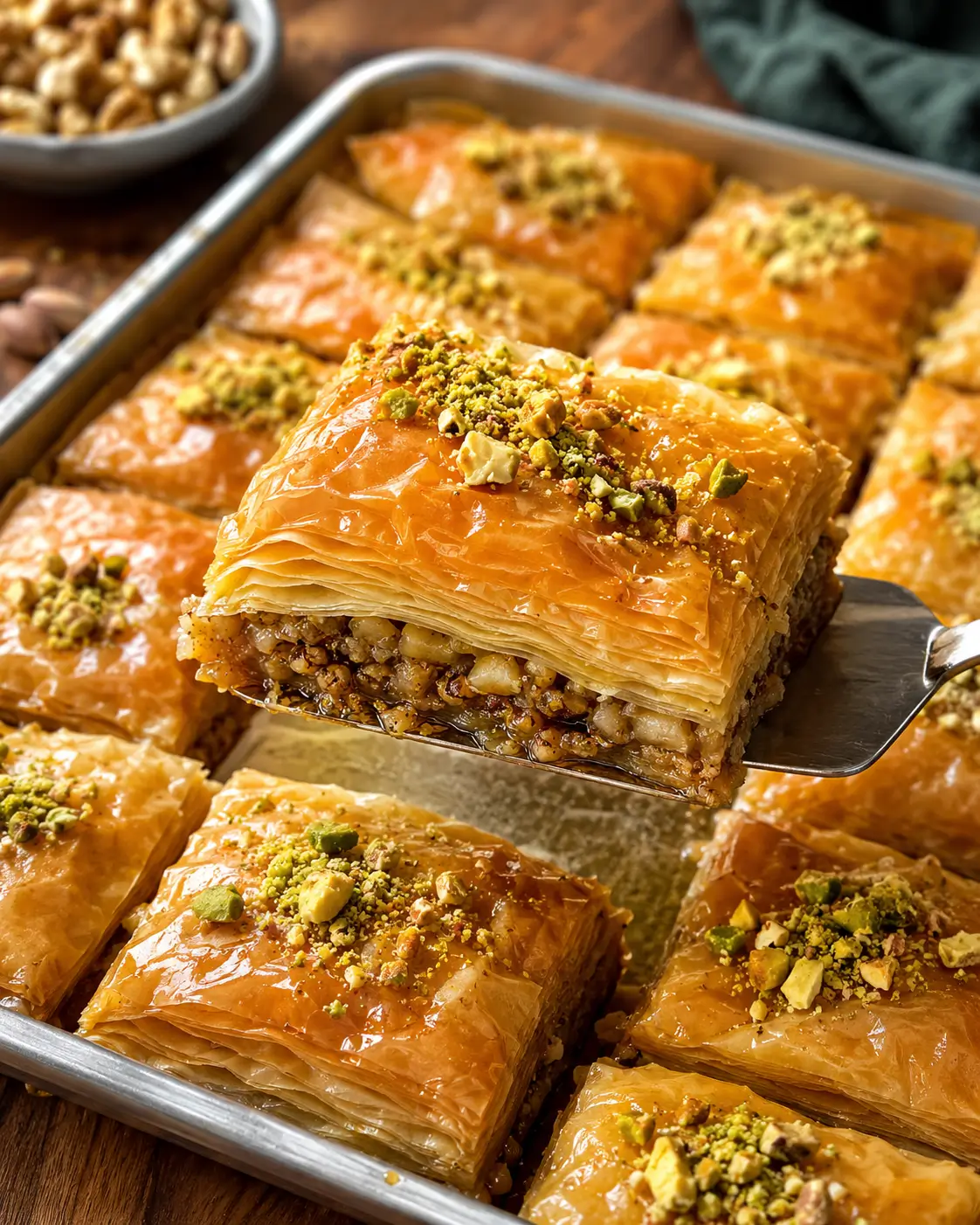
Crisp layers of buttery phyllo with cinnamon-spiced walnuts and a honey-lemon syrup that soaks into the pastry without making it heavy.
Contains: Milk · Tree Nuts · Wheat
This recipe contains butter, walnuts and wheat-based phyllo. Phyllo brands may contain or be processed with additional allergens, so check the package label if allergies are a concern.
WHY IT WORKS
Why This Recipe Works
01
Cool Syrup, Hot Pastry
Pouring completely cooled honey syrup over the hot, crisp pastry helps the baklava absorb sweetness while limiting trapped steam.
02
Build Even Layers
Lightly buttered phyllo sheets and evenly scattered walnuts create distinct flaky layers instead of a heavy, compressed filling.
03
Cut Before Baking
Cutting the assembled pastry before it goes into the oven makes clean portions easier and reduces shattering once the top layers are crisp.
WHAT YOU’LL NEED
Equipment
THE RECIPE
Ingredients & Method
Use these cooking tools without leaving the recipe. Change the servings, switch measurements, keep a private note in this browser, and use any timer buttons shown below the method steps.
Ingredient quantities have been scaled. Cooking time, oven temperature, pan size and method timings are unchanged.
My Notes
Ingredients
- Baklava
-
-
-
-
-
Tools
- Honey Syrup
-
-
-
Tools
-
Tools
Method
Tap a step number as you finish it.
Timed steps show a timer button beneath the instruction.
-
Make the syrup first so it can cool. Combine the sugar, water, honey and lemon juice in a small saucepan. Bring to a boil over medium heat, stirring until the sugar dissolves, then reduce the heat and simmer gently for 8 minutes. Remove from the heat and let the syrup cool completely.
-
Heat the oven to 350°F. Lightly butter a 9 by 13-inch metal baking pan. In a bowl, combine the chopped walnuts, cinnamon and salt.
-
Unroll the phyllo dough and keep the stack covered with a clean, barely damp kitchen towel while you work. If needed, trim the sheets so they fit the pan without large folds.
-
Lay 10 phyllo sheets in the pan one at a time, brushing each sheet lightly with melted butter before adding the next. Sprinkle one-third of the walnut mixture evenly over the top.
-
Add 5 more phyllo sheets, brushing each lightly with butter, then add another one-third of the walnut mixture. Repeat with another 5 buttered sheets and the remaining walnut mixture.
-
Finish with 10 phyllo sheets, brushing each lightly with butter. Brush the top sheet a little more generously and trim or tuck any untidy edges into the pan.
-
Using a sharp knife, cut through the assembled baklava all the way to the bottom of the pan into 24 diamonds or squares. Cutting before baking helps keep the crisp top layers from shattering later.
-
Bake for 45 to 50 minutes, until the phyllo is deeply golden and crisp. Start checking at 45 minutes and rotate the pan if one side is browning faster.
-
As soon as the baklava comes out of the oven, slowly pour the completely cooled syrup evenly over the hot pastry, especially along the cut lines. Leave it uncovered at room temperature for at least 4 hours, preferably overnight, so the syrup can settle through the layers without trapping steam.
-
Cut again along the original lines if needed, then lift out the pieces and serve at room temperature.
COOKING GUIDANCE
Practical Cooking Notes
Make Ahead
Baklava is well suited to making ahead. Bake it, add the syrup and let it stand at room temperature for at least 4 hours; making it the day before serving gives the syrup more time to settle through the layers. Once fully cool, cover it and keep it in a cool place.
Recipe tools
Adapt This Recipe
Change the quantities, measurements, pan, cooking method or ingredients, then turn what you need into a shopping list.
Recipe Notes
Ingredient Notes
Keep the phyllo covered with a barely damp towel while you work because exposed sheets dry quickly and can crack. Chop the walnuts finely enough to make even layers, but stop before they become a powder.
Useful Substitutions
Pistachios or pecans can replace some or all of the walnuts in the same weight. If using salted nuts, reduce or omit the added salt. Do not replace butter with a high-water spread, which can soften the phyllo.
INGREDIENT QUALITY
Quality Note
Taste a walnut before chopping the batch; stale or rancid nuts will dominate the finished baklava. Keep the phyllo covered while you work and brush each sheet lightly rather than saturating it with butter.
SPEND LESS
Cost-Saving Tip
Walnut pieces or baking-grade walnut fragments are ideal here because the nuts are finely chopped anyway. Compare them with whole walnut halves and use the better-value option.
COOKING TIPS
Tips
Keep the Phyllo Covered
Work with one sheet at a time and keep the rest under a barely damp towel. Dry phyllo becomes brittle quickly and is harder to layer neatly.
Brush, Don’t Soak
Use a thin, even coating of melted butter on each sheet. Heavy pools of butter can make the baked layers greasy instead of crisp.
Cut Before Baking
Slice all the way through the assembled layers before baking. The cuts guide the syrup and make the crisp pastry easier to portion later.
Give It Time to Rest
Leave the syruped baklava uncovered for at least 4 hours before serving. The flavor and texture are even better after an overnight rest.
MAKE IT LAST
Storing, Freezing & Reheating
Storing
Once the syrup has absorbed and the baklava is fully cool, cover it and keep it in a cool, dry place for up to 2 days. For longer storage, refrigerate it for up to 5 days, although the phyllo will gradually soften.
Freezing
Arrange fully cooled pieces in a rigid airtight container with parchment between layers and freeze for up to 3 months. Avoid crushing the delicate top sheets.
Thawing
Thaw frozen baklava in its container at room temperature so condensation forms on the container rather than directly on the pastry. Serve once fully thawed.
Refreshing Crispness
Baklava is normally served at room temperature. If refrigerated pieces have softened, warm them uncovered in a 300°F oven for 5 to 7 minutes, then let them cool before serving; avoid the microwave.
ESTIMATED PER SERVING
Nutrition
1 of 24 pieces
Nutrition information is an estimate. Where shown, % Daily Value uses standard US Daily Values for adults and children aged 4+; actual values vary with ingredient brands, exact quantities and portion size.
QUESTIONS
Baklava FAQs
Why should the syrup be cool when the baklava is hot?
Cool syrup poured over hot, crisp pastry is absorbed gradually while the pastry releases less steam than it would under hot syrup. This helps the layers stay distinct rather than becoming soggy.
Can I use pistachios instead of walnuts?
Yes. Pistachios can replace the walnuts in the same weight, or you can use a mixture. The flavor will change, but the same layering and syrup method works.
How do I stop phyllo from drying out while I assemble the baklava?
Keep the stack under a clean, barely damp kitchen towel and uncover only the sheet you are using. Work steadily and avoid a wet towel, which can make the sheets stick together.
Why is baklava cut before baking?
Cutting through the assembled pastry before baking gives the syrup channels to run into and makes the finished pieces easier to separate without crushing the crisp top layers.
Does baklava need to be refrigerated?
For the best crisp texture, fully cooled baklava can be kept covered in a cool, dry place for up to 2 days. Refrigerate it for longer storage, knowing that the phyllo will soften gradually.
Looking for Something Else to Cook?
Browse more SinOrSlim recipes or use the recipe tools to adapt what you already have.