
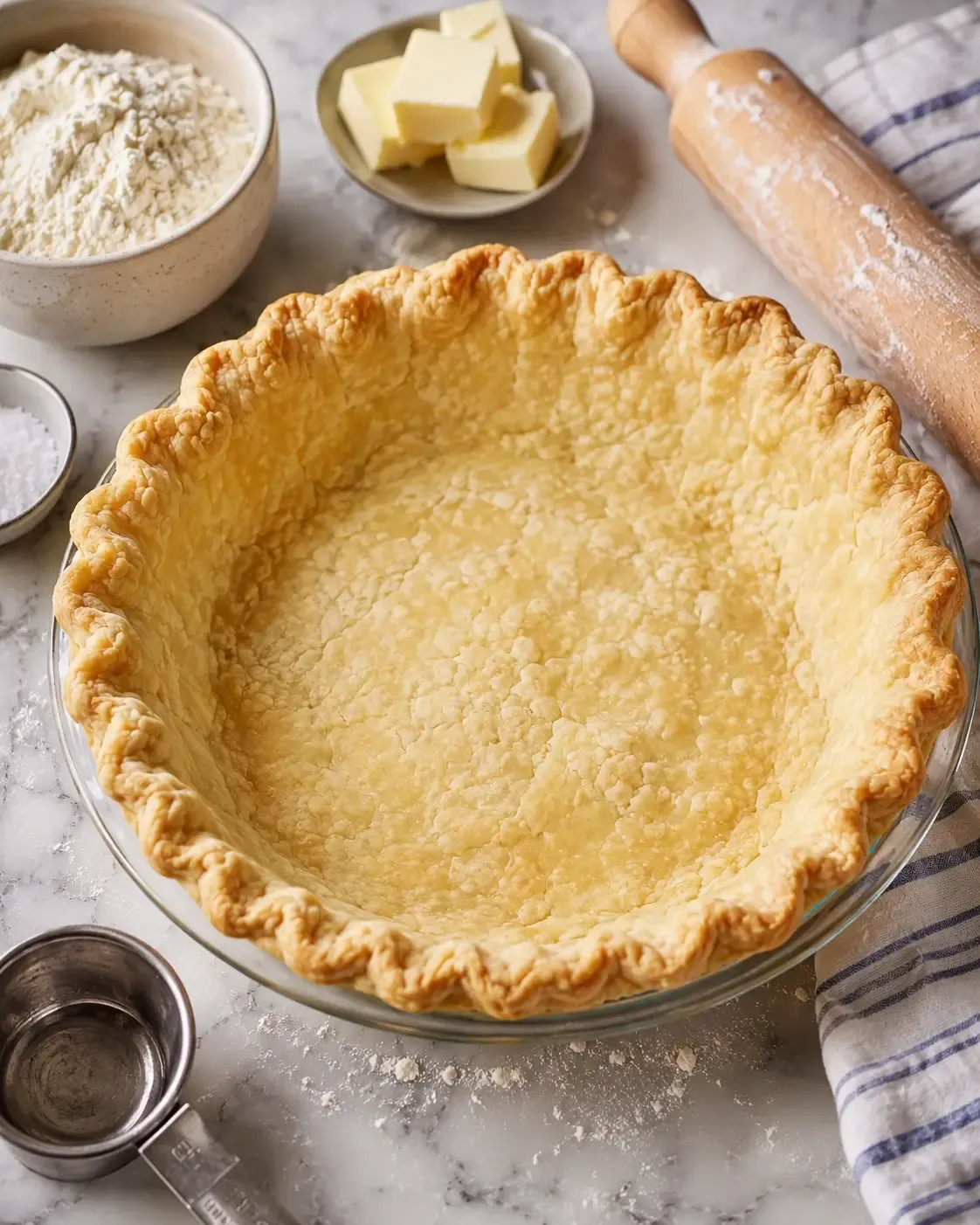
Pie Crust Recipe
A flaky, tender all-butter pie crust with crisp layers and a clean buttery flavor, suitable for both single- and double-crust pies.
Contains: Milk · Wheat
Contains milk and wheat. Nut-Free describes the ingredients in this recipe and is not a certification against cross-contact.
WHY IT WORKS
Why This Recipe Works
01
Keep It Cold
Cold butter stays in distinct pieces through mixing and rolling, creating flaky layers as it melts in the oven.
02
Add Water Gradually
Using only enough ice water for the dough to hold together helps keep the crust tender instead of tough.
03
Rest Before Rolling
Chilling the dough lets the flour hydrate and the butter firm up, making the crust easier to roll and less prone to shrinking.
WHAT YOU’LL NEED
Equipment
THE RECIPE
Ingredients & Method
Use these cooking tools without leaving the recipe. Change the servings, switch measurements, keep a private note in this browser, and use any timer buttons shown below the method steps.
Ingredient quantities have been scaled. Cooking time, oven temperature, pan size and method timings are unchanged.
My Notes
Ingredients
-
-
-
-
Tools
-
Method
Tap a step number as you finish it.
Timed steps show a timer button beneath the instruction.
-
In a large bowl, whisk together the flour, salt and sugar until evenly combined.
-
Add the cold butter. Toss to coat, then cut the butter into the flour with a pastry cutter or fork until the mixture looks coarse with plenty of pea-size butter pieces and a few larger flat flakes.
-
Drizzle in 6 tablespoons (tbsp) ice water while tossing the mixture with a fork. Squeeze a small handful; if it holds together, stop. If it is still dry and crumbly, add more ice water 1 tablespoon (tbsp) at a time just until the dough holds together without feeling wet.
-
Turn the dough onto a clean surface, divide it into 2 equal portions and press each portion into a flat disc without kneading. Wrap tightly and refrigerate for at least 1 hour and up to 2 days.
-
For each crust, let a very firm dough disc stand at room temperature for 5 to 10 minutes. On a lightly floured surface, roll it from the center outward into a roughly 12-inch round about 1/8 inch thick, turning the dough as needed to prevent sticking.
-
Ease the dough into a 9-inch pie dish without stretching it. Trim to about a 1-inch overhang, fold the edge under and crimp as desired. Refrigerate the shaped crust for 20 minutes before filling or blind baking.
-
For a filled pie, add the filling and bake according to that recipe. To blind bake the crust, heat the oven to 425°F, line the chilled crust with parchment paper or aluminum foil and fill it with pie weights or dried beans.
-
Bake the weighted crust for 15 minutes. Carefully lift out the liner and weights, then reduce the oven to 375°F. For a partially baked crust, bake for 5 to 8 minutes more; for a fully baked crust, continue for 12 to 15 minutes, until evenly golden. Cool completely before adding a filling that does not require further baking.
COOKING GUIDANCE
Practical Cooking Notes
Make Ahead
Wrap the dough discs tightly and refrigerate them for up to 2 days, or freeze them for up to 3 months. Thaw frozen dough overnight in the refrigerator before rolling. A shaped crust can also be chilled for several hours before filling or blind baking.
Recipe tools
Adapt This Recipe
Change the quantities, measurements, pan, cooking method or ingredients, then turn what you need into a shopping list.
Dietary options
Make This Recipe Work for You
Only straightforward swaps are offered automatically. If changing a defining ingredient would effectively create a different dish, that conversion is left out.
Make It Vegan
Change the following ingredient:
Replace1 US cup cold unsalted butter, cut into 1/2-inch cubes
With1 US cup cold unsalted plant-based butter, cut into 1/2-inch cubes
Replace225 grams (g) cold unsalted butter, cut into 1-centimetre cubes
With225 grams (g) cold unsalted plant-based butter, cut into 1-centimetre cubes
Use the same quantity of a plant-based butter suited to cooking or baking as required.
Make It Dairy-Free
Change the following ingredient:
Replace1 US cup cold unsalted butter, cut into 1/2-inch cubes
With1 US cup cold unsalted plant-based butter, cut into 1/2-inch cubes
Replace225 grams (g) cold unsalted butter, cut into 1-centimetre cubes
With225 grams (g) cold unsalted plant-based butter, cut into 1-centimetre cubes
Use the same quantity of a plant-based butter suited to cooking or baking as required.
For allergies, intolerances or strict dietary requirements, check the labels of the specific products you use. These swaps do not certify a recipe or ingredient as allergen-free.
Recipe Notes
Ingredient Notes
Use cold unsalted butter and ordinary all-purpose flour. The butter should remain in visible pea-size pieces and thin flakes after cutting it into the flour; those pieces help create the flaky texture during baking.
Useful Substitutions
Salted butter can replace unsalted butter; reduce the added salt to about 1/2 teaspoon (tsp). For a slightly easier-to-handle crust, up to half of the butter can be replaced with vegetable shortening, although the flavor will be less buttery.
INGREDIENT QUALITY
Quality Note
Keep the butter and water cold, leave visible butter pieces in the dough and stop mixing as soon as the dough holds together. These details matter more for flakiness than making the dough perfectly smooth.
SPEND LESS
Cost-Saving Tip
Store-brand unsalted butter and all-purpose flour work well here. Make both crusts even if you only need one, then freeze the second dough disc for a future pie.
COOKING TIPS
Tips
Keep Everything Cold
Cold butter and cold water make the dough easier to handle and help preserve distinct butter pieces that create flaky layers.
Mix Just Until Combined
Stop mixing as soon as the dough holds together when squeezed. Extra water or kneading develops more gluten and can make the crust tougher.
Flour Lightly
Use only enough flour to keep the dough from sticking while rolling. Too much bench flour can make the finished crust dry.
Do Not Stretch the Dough
Ease the rolled dough into the pie dish instead of pulling it into place. Stretched dough is more likely to shrink during baking.
MAKE IT LAST
Storing & Freezing Pie Crust
Refrigerate Dough
Wrap the dough discs tightly and refrigerate them for up to 2 days. Let very firm dough sit at room temperature for 5 to 10 minutes before rolling.
Freeze Dough
Wrap each dough disc well, place it in a freezer bag or airtight container and freeze for up to 3 months. Thaw overnight in the refrigerator before rolling.
Freeze a Shaped Crust
Fit the dough into a pie dish, crimp the edge and freeze until firm. Wrap the whole dish well and freeze for up to 3 months; follow the filling recipe for any changes needed when baking from frozen.
Store a Baked Shell
Once completely cool, keep a fully baked empty crust covered at room temperature for up to 1 day. For longer storage, wrap it carefully and freeze it.
ESTIMATED PER SERVING
Nutrition
1/8 of 1 crust
Nutrition information is an estimate. Where shown, % Daily Value uses standard US Daily Values for adults and children aged 4+; actual values vary with ingredient brands, exact quantities and portion size.
QUESTIONS
Pie Crust FAQs
Why does pie crust turn out tough?
Pie crust can become tough when too much water is added, the dough is kneaded or overworked, or too much flour is used while rolling. Mix only until the dough holds together and handle it as little as practical.
Can I make this pie crust in a food processor?
Yes. Pulse the flour, salt and sugar together, then pulse in the cold butter until pea-size pieces remain. Add the ice water gradually and stop processing as soon as the dough begins to form clumps; do not process it into a smooth ball.
How long should pie crust dough chill?
Chill the dough discs for at least 1 hour before rolling. The dough can stay refrigerated for up to 2 days if it is wrapped well.
Do I need to blind bake the crust?
That depends on the filling. No-bake fillings and some custard or very wet fillings usually need a partially or fully blind-baked shell, while many fruit pies are baked with raw dough. Follow the instructions for the filling you plan to use.
Can I freeze homemade pie crust?
Yes. Freeze wrapped dough discs for up to 3 months and thaw them overnight in the refrigerator before rolling. A shaped unbaked crust can also be frozen in its pie dish if it is well wrapped.



Looking for Something Else to Cook?
Browse more SinOrSlim recipes or use the recipe tools to adapt what you already have.