
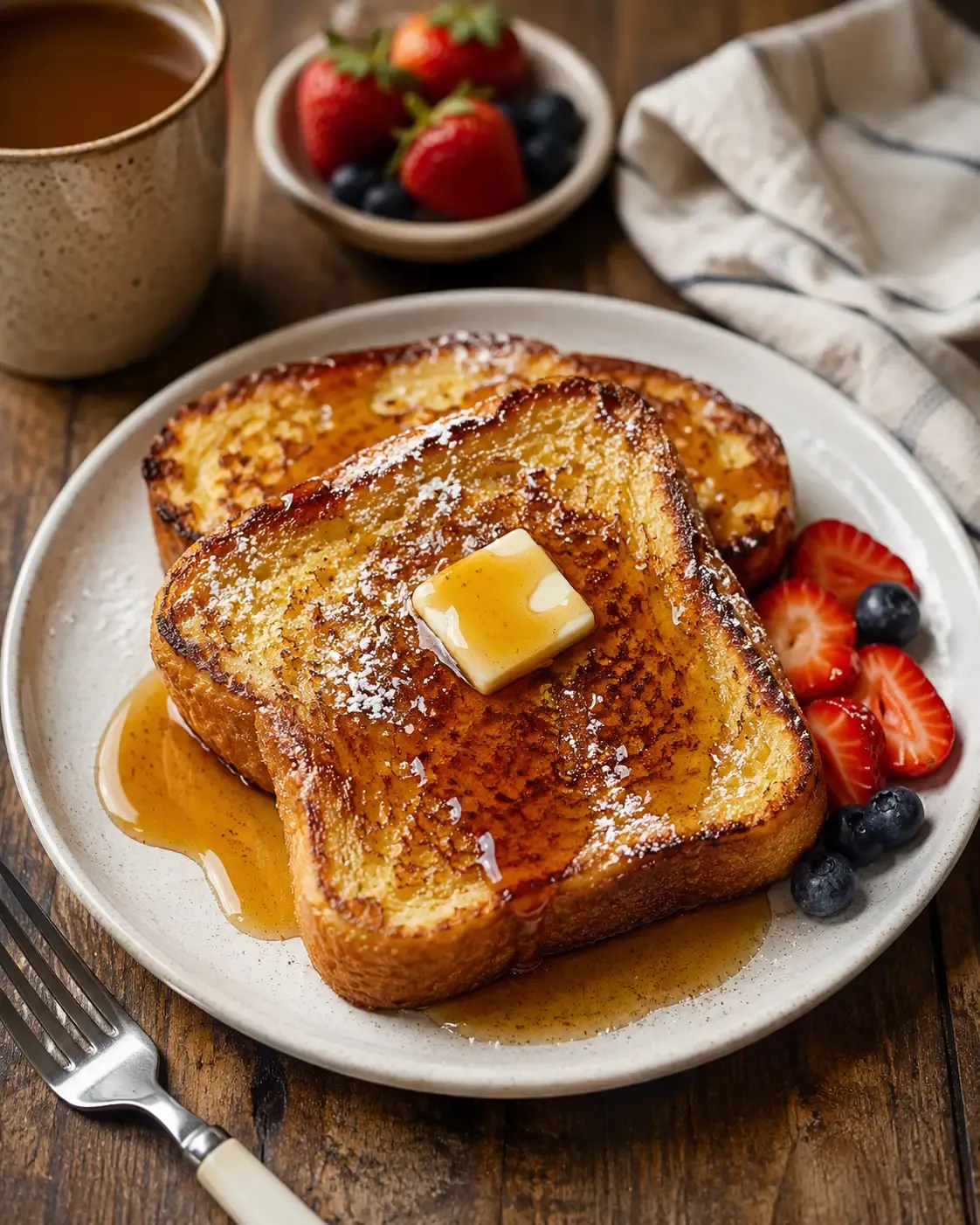
French Toast Recipe
Classic cinnamon and vanilla French toast with a golden buttery exterior and a soft, custardy center.
Contains: Egg · Milk · Wheat
Bread ingredients vary by product. Check the label of the bread and other packaged ingredients you use if you need to manage food allergies.
WHY IT WORKS
Why This Recipe Works
01
Balanced Custard
Eggs and milk create a soft, custardy center while a small amount of sugar helps the outside brown evenly.
02
Cinnamon & Vanilla
Vanilla adds warm sweetness while cinnamon gives the classic French toast flavor without overpowering the bread.
03
Cook Over Medium Heat
Moderate heat gives the custard time to set before the buttery exterior becomes too dark.
WHAT YOU’LL NEED
Equipment
THE RECIPE
Ingredients & Method
Use these cooking tools without leaving the recipe. Change the servings, switch measurements, keep a private note in this browser, and use any timer buttons shown below the method steps.
Ingredient quantities have been scaled. Cooking time, oven temperature, pan size and method timings are unchanged.
My Notes
Ingredients
-
-
Tools
-
-
Tools
-
-
-
-
Tools
-
Tools
Method
Tap a step number as you finish it.
Timed steps show a timer button beneath the instruction.
-
Crack the eggs into a large shallow bowl or pie plate. Add the sugar, cinnamon and salt and whisk until well combined.
-
Whisk in the milk and vanilla extract until the custard is smooth. Whisk again briefly between batches if the cinnamon begins to collect on the surface.
-
Heat a large skillet or griddle over medium heat. Add 1 tablespoon (tbsp) of the butter and let it melt and foam without browning.
-
Working with 2 to 3 slices at a time, dip the bread in the custard and turn to coat both sides. Let the excess drip back into the bowl, place the bread in the hot skillet and cook the first side for about 2 to 3 minutes, until golden brown.
-
Flip the bread and cook the second side for about 2 to 3 minutes, until golden brown and the center is set.
-
Transfer the cooked French toast to a plate. Add the remaining butter as needed and repeat with the remaining bread, adjusting the heat if the butter starts to brown too quickly.
-
Serve the French toast warm with the maple syrup.
COOKING GUIDANCE
Practical Cooking Notes
Make Ahead
Whisk the custard up to 24 hours ahead, cover it and refrigerate it. Re-whisk before using because the cinnamon may settle or float. Dip the bread only when you are ready to cook it.
Recipe tools
Adapt This Recipe
Change the quantities, measurements, pan, cooking method or ingredients, then turn what you need into a shopping list.
Dietary options
Make This Recipe Work for You
Only straightforward swaps are offered automatically. If changing a defining ingredient would effectively create a different dish, that conversion is left out.
Make It Dairy-Free
Change the following ingredients:
Replace2/3 US cup whole milk
With2/3 US cup unsweetened neutral plant milk
Replace160 millilitres (ml) whole milk
With160 millilitres (ml) unsweetened neutral plant milk
Use the same quantity of an unsweetened neutral plant milk; flavor, protein and browning can differ.
Replace2 tablespoons (tbsp) unsalted butter, divided, for cooking
With2 tablespoons (tbsp) unsalted plant-based butter, divided, for cooking
Replace30 grams (g) unsalted butter, divided, for cooking
With30 grams (g) unsalted plant-based butter, divided, for cooking
Use the same quantity of a plant-based butter suited to cooking or baking as required.
Make It Gluten-Free
Change the following ingredient:
Replace8 slices brioche or thick-cut white sandwich bread, preferably slightly dry
With8 slices gluten-free brioche-style or thick-cut white sandwich bread, preferably slightly dry
Replace8 slices brioche or thick-cut white bread, preferably slightly dry
With8 slices gluten-free brioche-style or thick-cut white sandwich bread, preferably slightly dry
Use a gluten-free bread or loaf with a similar shape and texture.
For allergies, intolerances or strict dietary requirements, check the labels of the specific products you use. These swaps do not certify a recipe or ingredient as allergen-free.
Recipe Notes
Ingredient Notes
Slightly dry, sturdy bread absorbs the custard without falling apart. Brioche gives a richer result, while thick-cut white sandwich bread makes an excellent everyday version.
Useful Substitutions
Challah or another sturdy enriched bread can replace brioche. Two-percent milk can replace whole milk in the same amount, although the custard will be a little less rich.
INGREDIENT QUALITY
Quality Note
Slightly dry, sturdy bread gives the most reliable texture because it absorbs the custard without collapsing. If your bread is very fresh, leave the slices uncovered for 20 to 30 minutes before cooking.
SPEND LESS
Cost-Saving Tip
You do not need brioche for good French toast. Thick-cut white sandwich bread is usually less expensive and works well when it is slightly dry.
COOKING TIPS
Tips
Use Slightly Dry Bread
Bread that is a day old or lightly dried absorbs the custard more evenly and is less likely to turn soft or tear during dipping.
Cinnamon & Vanilla
Whisk the eggs, sugar, cinnamon and salt until smooth before adding the milk and vanilla so the cinnamon is distributed more evenly.
Dip, Don’t Soak
Coat each slice on both sides and let the excess custard drip away. A brief dip is enough for most thick-cut bread.
Keep the Heat Moderate
Cook over medium heat and add fresh butter between batches as needed. High heat can burn the butter and brown the bread before the center sets.
MAKE IT LAST
Storing, Freezing & Reheating
Storing
Cool leftover French toast, refrigerate it in an airtight container within 2 hours and use it within 3 to 4 days.
Freezing
Freeze cooled slices in a single layer until firm, then transfer them to an airtight freezer bag or container. For best texture, use within about 2 months.
Reheat in the Oven
Arrange slices on a baking sheet and warm at 350°F for about 8 to 10 minutes, turning once, until hot throughout.
Reheat in the Microwave
Heat individual slices in short intervals until hot throughout. The microwave is convenient, although the French toast will be softer than when reheated in the oven or toaster.
ESTIMATED PER SERVING
Nutrition
2 slices with maple syrup
Nutrition information is an estimate. Where shown, % Daily Value uses standard US Daily Values for adults and children aged 4+; actual values vary with ingredient brands, exact quantities and portion size.
QUESTIONS
French Toast FAQs
What bread is best for French toast?
Brioche is rich and tender, but challah or thick-cut white sandwich bread also works well. Slightly dry bread is easier to dip without becoming fragile.
Why does my French toast turn out soggy?
Very fresh or thin bread can absorb too much custard, and low pan heat can leave the center wet. Use sturdy bread, dip it briefly and cook over medium heat.
Can I make French toast without brioche?
Yes. Thick-cut white sandwich bread or challah works well. Choose slices sturdy enough to absorb the custard without tearing.
How do I stop the cinnamon from clumping?
Whisk the cinnamon with the eggs, sugar and salt before adding the milk. It will still float slightly, so whisk the custard again between batches.
Can I make French toast ahead of time?
You can whisk the custard up to 24 hours ahead and keep it covered in the refrigerator. Re-whisk before dipping the bread. Cooked French toast can also be chilled or frozen and reheated later.

Looking for Something Else to Cook?
Browse more SinOrSlim recipes or use the recipe tools to adapt what you already have.