
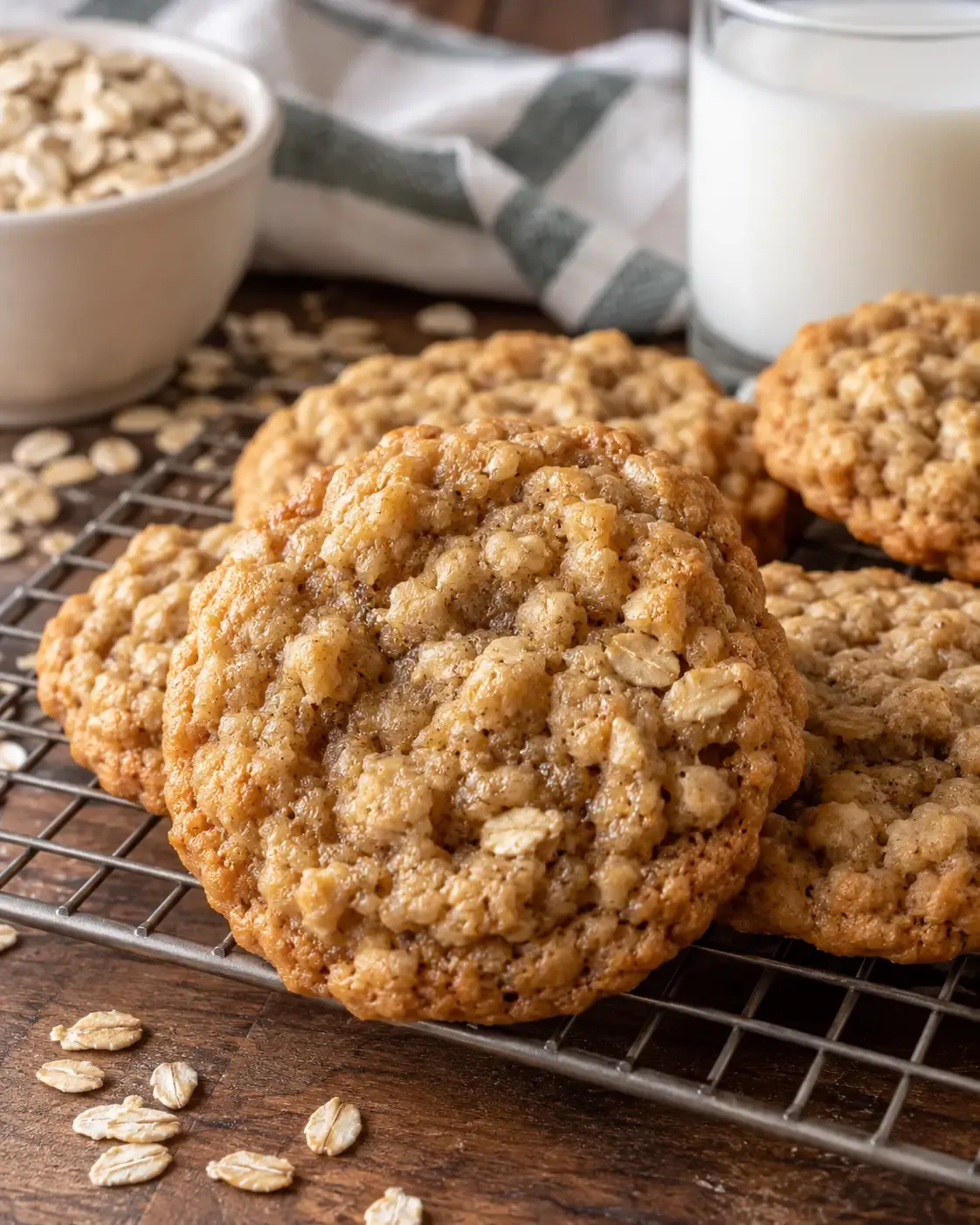
Oatmeal Cookie Recipe
Soft and chewy oatmeal cookies with rolled oats, brown sugar and a touch of cinnamon, baked until the edges are set and the centers stay tender.
Contains: Milk · Egg · Wheat
This recipe contains milk, egg and wheat. If cooking for someone with a nut allergy, check the labels of packaged ingredients such as oats and vanilla for any cross-contact information relevant to their needs.
WHY IT WORKS
Why This Recipe Works
01
Brown Sugar for Chew
Brown sugar and an extra egg yolk add moisture and richness, helping the centers stay soft and chewy instead of dry or cakey.
02
Rolled Oats for Texture
Old-fashioned rolled oats keep a distinct oat texture and give the cookies a satisfying chew without needing raisins, chips or other add-ins.
03
No Chill Needed
The balance of softened butter, flour and rolled oats makes the dough scoopable as soon as it is mixed, so the cookies can go straight into the oven.
WHAT YOU’LL NEED
Equipment
THE RECIPE
Ingredients & Method
Use these cooking tools without leaving the recipe. Change the servings, switch measurements, keep a private note in this browser, and use any timer buttons shown below the method steps.
Ingredient quantities have been scaled. Cooking time, oven temperature, pan size and method timings are unchanged.
My Notes
Ingredients
-
Tools
-
Tools
-
-
-
-
Tools
-
-
Tools
-
-
-
Method
Tap a step number as you finish it.
Timed steps show a timer button beneath the instruction.
-
Heat the oven to 350°F with racks in the upper and lower thirds. Line 2 large baking sheets with parchment paper.
-
In a medium bowl, whisk together the flour, baking soda, cinnamon and salt.
-
In a large bowl, beat the softened butter, brown sugar and granulated sugar with an electric mixer for about 2 to 3 minutes, until creamy and slightly lighter in color.
-
Beat in the egg, egg yolk and vanilla until smooth and evenly combined.
-
Add the flour mixture and mix on low just until no dry flour remains. Fold in the rolled oats until evenly distributed.
-
Scoop the dough into 2-tablespoon portions and place 12 cookies on each prepared baking sheet, leaving about 2 inches between them. Bake both sheets for 11 to 13 minutes, switching the upper and lower sheets and rotating them front to back after about 6 minutes. The edges should be set and lightly golden while the centers still look soft.
-
Leave the cookies on the baking sheets for 5 minutes, then transfer them to a wire rack to cool. Serve warm or let them cool completely before storing.
COOKING GUIDANCE
Practical Cooking Notes
Doneness
The cookies are ready when the edges are set and lightly golden but the centers still look soft. They continue to firm as they cool on the baking sheets.
Make Ahead
The cookie dough can be covered and refrigerated for up to 48 hours before baking. If it becomes very firm, let it stand at room temperature for about 10 to 15 minutes so it is easier to scoop; the chilled dough may need an extra minute or two in the oven.
Recipe tools
Adapt This Recipe
Change the quantities, measurements, pan, cooking method or ingredients, then turn what you need into a shopping list.
Dietary options
Make This Recipe Work for You
Only straightforward swaps are offered automatically. If changing a defining ingredient would effectively create a different dish, that conversion is left out.
Make It Dairy-Free
Change the following ingredient:
Replace3/4 US cup unsalted butter, softened
With3/4 US cup unsalted plant-based butter, softened
Replace170 grams (g) unsalted butter, softened
With170 grams (g) unsalted plant-based butter, softened
Use the same quantity of a plant-based butter suited to cooking or baking as required.
For allergies, intolerances or strict dietary requirements, check the labels of the specific products you use. These swaps do not certify a recipe or ingredient as allergen-free.
Recipe Notes
Ingredient Notes
Use old-fashioned rolled oats rather than steel-cut oats; they soften during baking while still keeping a clear oat texture. The butter should be softened but not melted, which helps the dough hold its shape without a chilling step.
Useful Substitutions
Salted butter can replace the unsalted butter; reduce the added salt to about 1/4 teaspoon (tsp). Dark brown sugar can replace light brown sugar in the same quantity for a slightly deeper molasses flavor.
INGREDIENT QUALITY
Quality Note
Use old-fashioned rolled oats for the most distinct chewy oat texture, and soften the butter rather than melting it. For the most consistent result, weigh the flour if you can and stop baking while the centers still look slightly soft.
SPEND LESS
Cost-Saving Tip
Standard rolled oats and all-purpose flour work well here; premium baking-specific versions are unnecessary. If you use oats regularly, a larger pack can reduce packaging waste, provided you keep the oats airtight in a cool, dry place.
COOKING TIPS
Tips
Soften, Don’t Melt, the Butter
Butter that is soft enough to beat but still holds its shape gives the dough structure. Melted or very warm butter can make the cookies spread too far.
Measure the Flour Carefully
For consistent cookies, weigh the flour if possible. If using cups, spoon the flour into the cup and level it rather than packing it down.
Stop While the Centers Look Soft
Take the cookies out when the edges are set but the centers still look a little underdone. The residual heat firms them as they cool.
Use Cool Baking Sheets
If you bake another batch, let the baking sheets cool first. Dough placed on a hot sheet starts melting before it reaches the oven and can spread unevenly.
MAKE IT LAST
Storing, Freezing & Reheating
Storing
Keep fully cooled cookies in an airtight container at room temperature for about 4 to 5 days. A well-sealed container helps preserve their soft texture.
Freezing
Freeze fully cooled cookies in an airtight container or freezer bag for up to about 2 months. Thaw at room temperature before serving.
Freeze the Dough
Freeze scooped dough portions on a lined tray until firm, then transfer them to a freezer bag for up to about 2 months. Bake from frozen, allowing a little extra time and watching the edges for doneness.
Refresh Before Serving
For a just-baked texture, warm a cookie in the microwave for a few seconds or in a 300°F oven for about 3 to 4 minutes. Avoid overheating, which can make it dry.
ESTIMATED PER SERVING
Nutrition
1 cookie
Nutrition information is an estimate. Where shown, % Daily Value uses standard US Daily Values for adults and children aged 4+; actual values vary with ingredient brands, exact quantities and portion size.
QUESTIONS
Oatmeal Cookie FAQs
Can I use quick oats instead of old-fashioned rolled oats?
Old-fashioned rolled oats give the chewiest texture and are the best fit for this recipe. Quick oats are more finely cut and absorb moisture differently, so the cookies can turn out softer and less distinctly oaty.
Why did my oatmeal cookies spread too much?
Butter that is too warm, dough placed on a hot baking sheet, or too little flour can all increase spreading. Start with softened rather than melted butter and measure the flour carefully.
Can I chill the oatmeal cookie dough?
Yes. Chilling is not required, but the covered dough can be refrigerated for up to 48 hours. Let very firm dough soften briefly at room temperature before scooping.
How do I keep oatmeal cookies soft and chewy?
Do not overbake them. Remove the cookies when the edges are set and lightly golden but the centers still look soft, then let them finish setting on the baking sheets.
Can I use salted butter?
Yes. Use the same amount of salted butter and reduce the added salt to about 1/4 teaspoon (tsp).

Looking for Something Else to Cook?
Browse more SinOrSlim recipes or use the recipe tools to adapt what you already have.