
Pavlova Recipe
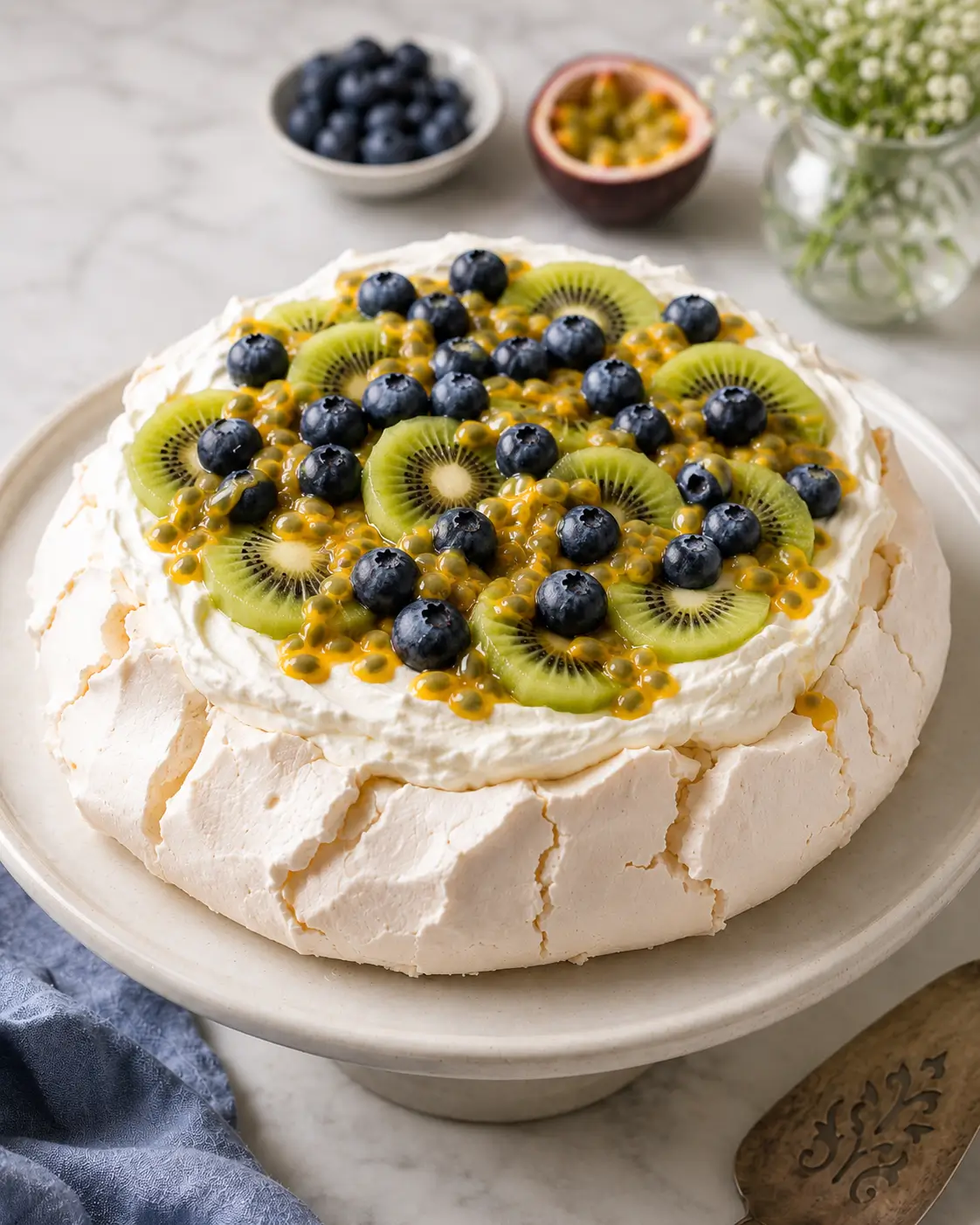
A classic pavlova with a crisp meringue shell, soft marshmallow center, whipped cream, kiwi, blueberries and passion fruit.
Contains: Egg · Milk
WHY IT WORKS
Why This Recipe Works
01
Slow, Low Heat
A low oven dries the outside gradually while the center stays soft and marshmallow-like instead of turning brittle throughout.
02
Add Sugar Gradually
Adding superfine sugar a little at a time helps it dissolve into the egg whites, giving the meringue a glossy, stable structure.
03
Cool It Slowly
Leaving the pavlova in the switched-off oven lets it cool gradually, which helps limit sudden collapse and large temperature-shock cracks.
WHAT YOU’LL NEED
Equipment
THE RECIPE
Ingredients & Method
Use these cooking tools without leaving the recipe. Change the servings, switch measurements, keep a private note in this browser, and use any timer buttons shown below the method steps.
Ingredient quantities have been scaled. Cooking time, oven temperature, pan size and method timings are unchanged.
My Notes
Ingredients
- Pavlova
-
-
-
Tools
-
-
Tools
- Topping
-
-
-
Tools
-
-
-
Method
Tap a step number as you finish it.
Timed steps show a timer button beneath the instruction.
-
Heat the oven to 250°F. Line a large rimmed baking sheet with parchment paper. Trace a 9-inch circle on the parchment, then turn the paper over so the mark is underneath.
-
Put the egg whites in a completely clean, grease-free mixing bowl. Beat with an electric mixer on medium speed until foamy, then increase to medium-high and beat until soft peaks form.
-
Add the superfine sugar gradually, about 1 tablespoon (tbsp) at a time, beating well after each addition. Continue beating for about 6 to 8 minutes, until the meringue is thick, glossy and holds stiff peaks. Rub a little between clean fingertips; it should feel smooth rather than gritty.
-
Sift the cornstarch over the meringue, then add the vinegar and vanilla. Fold gently just until combined. Spoon the meringue onto the marked circle and shape it into a tall round with a shallow well in the center and slightly higher edges.
-
Bake for 85 minutes without opening the oven door. The outside should look dry and pale ivory rather than browned.
-
Turn off the oven and leave the pavlova inside with the door closed for 90 minutes so it cools gradually. Remove it and let it finish cooling to room temperature if necessary.
-
Just before serving, beat the cold heavy whipping cream with the confectioners' sugar and vanilla until soft peaks form. Spoon it over the completely cooled pavlova, then top with the kiwi, blueberries and passion fruit pulp. Serve soon after assembling.
COOKING GUIDANCE
Practical Cooking Notes
Doneness
The baked shell should look dry and pale ivory and feel crisp on the outside. The center is meant to stay soft and marshmallow-like, so a few surface cracks are normal.
Make Ahead
Bake and cool the meringue shell up to 1 day ahead, then keep it airtight at room temperature in a cool, dry place. Do not add the cream and fruit until shortly before serving because moisture will gradually soften the shell.
Recipe tools
Adapt This Recipe
Change the quantities, measurements, pan, cooking method or ingredients, then turn what you need into a shopping list.
Dietary options
Make This Recipe Work for You
Only straightforward swaps are offered automatically. If changing a defining ingredient would effectively create a different dish, that conversion is left out.
Make It Dairy-Free
Change the following ingredient:
Replace1 US cup heavy whipping cream, cold
With1 US cup plant-based cream, cold
Replace240 millilitres (ml) whipping cream, cold
With240 millilitres (ml) plant-based cream, cold
Choose an unsweetened plant-based cream intended for the same use; whipping and thickening performance varies.
For allergies, intolerances or strict dietary requirements, check the labels of the specific products you use. These swaps do not certify a recipe or ingredient as allergen-free.
Recipe Notes
Ingredient Notes
Use room-temperature egg whites and a spotless, grease-free bowl; even a small trace of yolk or fat can make the whites harder to whip. Superfine sugar dissolves more readily than coarse granulated sugar, while cornstarch helps support the pavlova’s soft center.
Useful Substitutions
If superfine sugar is unavailable, pulse regular granulated sugar briefly in a food processor until finer, without turning it into powdered sugar. Vanilla bean paste can replace vanilla extract in the same quantity.
INGREDIENT QUALITY
Quality Note
For the most stable meringue, use room-temperature egg whites in a completely clean, grease-free bowl and add the superfine sugar gradually. Beat until the mixture is glossy and a small dab rubbed between your fingers no longer feels gritty.
SPEND LESS
Cost-Saving Tip
Use fruit that is good value and in good condition while keeping the total topping quantity similar; the meringue and whipped cream remain the defining base of the pavlova.
COOKING TIPS
Tips
Start With a Clean Bowl
Wipe the bowl and beaters completely clean and dry before adding the egg whites. Grease or yolk residue can prevent a strong meringue from forming.
Check the Sugar Has Dissolved
Rub a little meringue between clean fingertips. It should feel smooth rather than noticeably gritty before you shape the pavlova.
Build a Shallow Well
Keep the edges slightly higher than the center so the cooled pavlova has a natural space for the whipped cream and fruit.
Top Just Before Serving
Add the whipped cream and fruit shortly before serving. Moist toppings gradually soften the crisp meringue shell.
MAKE IT LAST
Storing, Freezing & Reheating
Store the Unfilled Shell
Once completely cool, keep the unfilled pavlova shell in an airtight container at room temperature for up to 1 day. Choose a cool, dry place.
Store Assembled Pavlova
Cover leftovers and refrigerate for up to 1 day. The meringue will soften as it absorbs moisture from the cream and fruit, so the texture is best on the day it is assembled.
Freezing
Freezing an assembled pavlova is not recommended. Thawing can create condensation that softens the meringue and makes the fruit topping watery.
Keep It Dry
Do not refrigerate the plain meringue shell unless necessary. Refrigerators are humid, and that moisture can make the crisp exterior sticky.
ESTIMATED PER SERVING
Nutrition
1 of 8 servings
Nutrition information is an estimate. Where shown, % Daily Value uses standard US Daily Values for adults and children aged 4+; actual values vary with ingredient brands, exact quantities and portion size.
QUESTIONS
Pavlova FAQs
Why did my pavlova crack?
Some cracking is normal as a pavlova cools. Cooling it gradually in the switched-off oven helps reduce sudden temperature changes, but a few cracks do not affect the texture or flavor.
How do I know when the pavlova is baked?
The outside should look dry and pale ivory and feel crisp rather than sticky. The center is meant to remain soft and marshmallow-like, so do not keep baking simply to make the whole dessert hard.
Why is my pavlova weeping or sticky?
Humidity and undissolved sugar can both make a pavlova sticky or cause syrupy beads. Add the sugar gradually, beat until the meringue feels smooth, and store the cooled shell somewhere dry.
Can I make pavlova a day ahead?
Yes. Bake and cool the meringue shell, then keep it airtight at room temperature for up to 1 day. Add the whipped cream and fruit shortly before serving.
Can I assemble pavlova ahead of serving?
For the best contrast between crisp shell and soft topping, assemble it shortly before serving. If necessary, you can top it up to about 1 hour ahead and keep it refrigerated.


Looking for Something Else to Cook?
Browse more SinOrSlim recipes or use the recipe tools to adapt what you already have.