Prime Rib Recipe
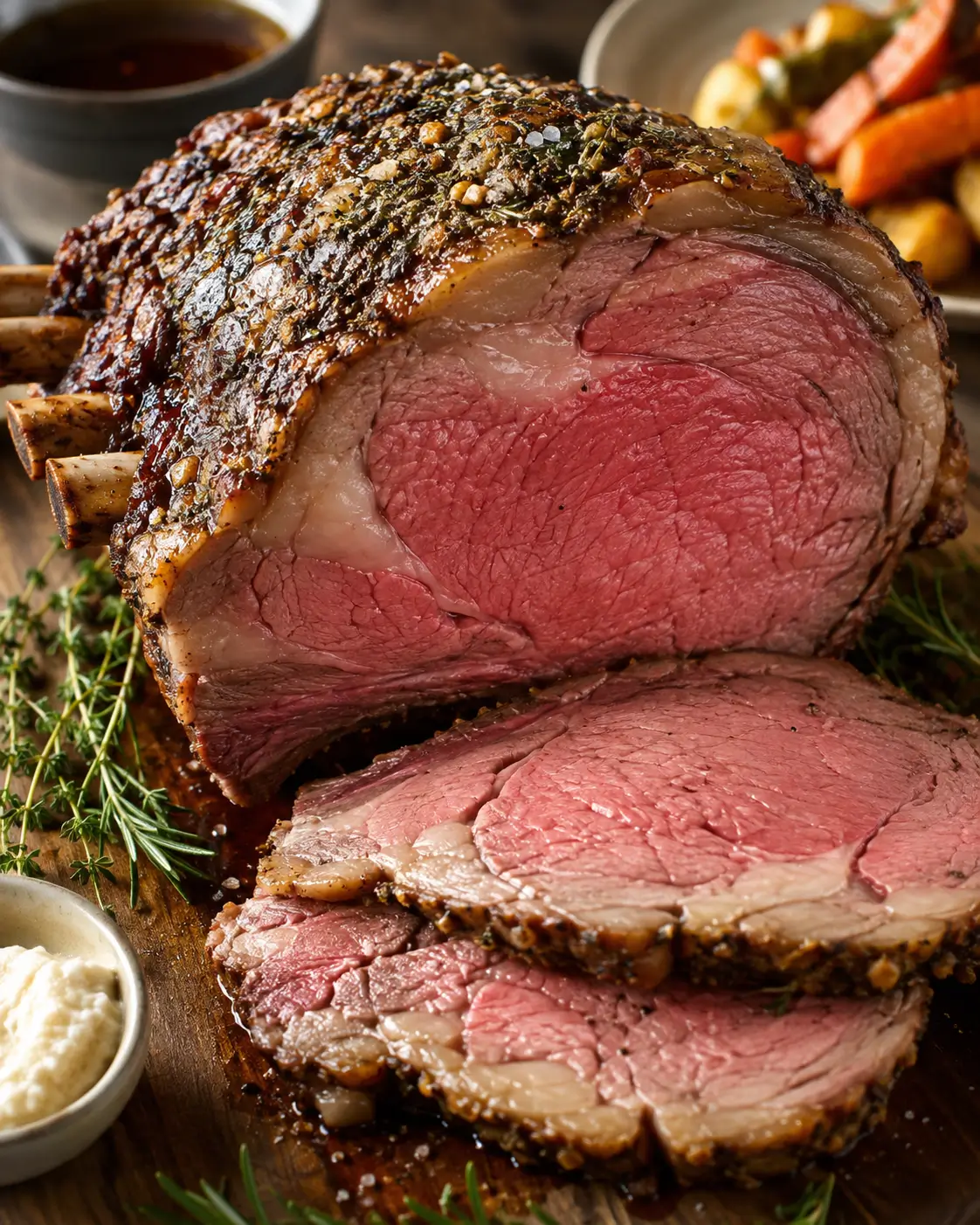
A classic bone-in prime rib with a deeply browned salt-and-pepper crust and juicy, tender slices, roasted simply so the beef stays the focus.
WHY IT WORKS
Why This Recipe Works
01
Keep the Seasoning Simple
A straightforward coating of olive oil, kosher salt and black pepper seasons the beef without covering up the flavor of the rib roast.
02
Roast on the Bones
Keeping the roast bone-side down gives it a stable base while the fat cap stays on top and bastes the surface as it cooks.
03
Use a Thermometer
Prime rib cooking time varies with roast shape and starting temperature, so the center temperature is more reliable than minutes per pound.
WHAT YOU’LL NEED
Equipment
THE RECIPE
Ingredients & Method
Use these cooking tools without leaving the recipe. Change the servings, switch measurements, keep a private note in this browser, and use any timer buttons shown below the method steps.
Ingredient quantities have been scaled. Cooking time, oven temperature, pan size and method timings are unchanged.
My Notes
Ingredients
Method
Tap a step number as you finish it.
Timed steps show a timer button beneath the instruction.
-
Heat the oven to 325°F. Set an oven rack in the lower-middle position and place a roasting rack inside a 13 by 9-inch shallow roasting pan.
-
Pat the prime rib dry with paper towels. Rub the roast all over with the olive oil, then season evenly with the kosher salt and black pepper. Set it bone-side down and fat-side up on the rack.
-
Roast for about 1 hour 45 minutes to 2 hours 15 minutes. Start checking near 1 hour 30 minutes and continue cooking until a food thermometer inserted into the thickest part of the meat without touching bone reads at least 145°F.
-
Transfer the roast to a large cutting board, loosely tent it with foil and rest for 20 to 30 minutes before carving.
-
To carve, cut along the rib bones to remove them in one piece, then slice the roast across the grain into portions and serve while warm.
COOKING GUIDANCE
Practical Cooking Notes
Doneness
145°F / 63°C
Measure the thickest part of the roast without touching bone. USDA guidance for beef roasts is at least 145°F with a minimum 3-minute rest; this recipe rests the roast for 20 to 30 minutes before carving.
Make Ahead
For deeper seasoning, apply the full measured salt 8 to 24 hours ahead and refrigerate the roast uncovered. Keep it chilled, then add the olive oil and black pepper immediately before roasting; do not add a second measure of salt.
Recipe tools
Adapt This Recipe
Change the quantities, measurements, pan, cooking method or ingredients, then turn what you need into a shopping list.
Dietary options
Make This Recipe Work for You
Only straightforward swaps are offered automatically. If changing a defining ingredient would effectively create a different dish, that conversion is left out.
For allergies, intolerances or strict dietary requirements, check the labels of the specific products you use. These swaps do not certify a recipe or ingredient as allergen-free.
Recipe Notes
Ingredient Notes
Choose a bone-in standing rib roast of about 5 pounds (lb), ideally with two ribs and even marbling. Leave the fat cap in place unless it is unusually thick; it protects the surface and adds flavor while the roast cooks.
Useful Substitutions
A boneless prime rib roast can be used at the same approximate weight, but it may cook a little faster, so start checking the center temperature earlier. Avocado oil can replace the olive oil in the same quantity.
INGREDIENT QUALITY
Quality Note
Choose a rib roast with even marbling and a substantial but not excessive fat cap. Because prime rib is an expensive cut, use a food thermometer and begin checking early rather than extending the roast by time alone.
SPEND LESS
Cost-Saving Tip
Prime rib is often discounted around major holidays. Compare the price per pound and buy the roast size you actually need; freezing an uncooked extra rib portion can be better value than buying a larger roast and wasting leftovers.
COOKING TIPS
Tips
Salt Ahead When You Can
For deeper seasoning and a drier surface, apply the measured salt 8 to 24 hours ahead and refrigerate the roast uncovered. Add the oil and pepper just before roasting.
Place the Thermometer Carefully
Insert the thermometer into the thickest central part of the meat without touching a rib bone or sitting in a large pocket of fat.
Roast Fat-Side Up
Set the roast bone-side down with the fat cap facing up. The bones support the roast while the rendered fat helps brown and protect the top.
Rest Before Carving
Rest the roast for 20 to 30 minutes before carving so the juices redistribute and the meat is easier to slice cleanly.
MAKE IT LAST
Storing, Freezing & Reheating
Storing
Refrigerate leftover prime rib within 2 hours in a covered container and use it within 3 to 4 days.
Freezing
Once chilled, wrap individual slices or portions tightly and freeze them in an airtight container or freezer bag. For best quality, use within about 3 months and thaw overnight in the refrigerator.
Reheat in the Oven
Put slices in a covered baking dish with a small splash of water and warm at 250°F until the center reaches 165°F. The lower oven temperature helps limit additional browning.
Reheat in the Microwave
Cover a slice and heat at reduced power in short intervals until hot throughout and the center reaches 165°F. Short bursts help reduce overcooking at the edges.
ESTIMATED PER SERVING
Nutrition
1 of 8 servings
Nutrition information is an estimate. Where shown, % Daily Value uses standard US Daily Values for adults and children aged 4+; actual values vary with ingredient brands, exact quantities and portion size.
QUESTIONS
Prime Rib FAQs
What cut of beef is prime rib?
Prime rib is a beef rib roast cut from the rib section. A bone-in version is also called a standing rib roast because it can roast with the bones underneath it.
What temperature should prime rib reach?
USDA guidance is to cook beef roasts to at least 145°F, measured with a food thermometer, and rest them for at least 3 minutes. This recipe uses that minimum and rests the roast for 20 to 30 minutes before carving.
Can I use a boneless prime rib roast?
Yes. A boneless rib roast works well, but it may cook a little faster than a bone-in roast of the same weight. Start checking its internal temperature earlier rather than relying only on the stated time range.
How much prime rib should I allow per person?
A practical starting point is about 1/2 to 3/4 pound (lb) of raw bone-in prime rib per person, depending on appetite and how many side dishes you are serving. A 5-pound (lb) roast is a generous size for about 8 servings.
Can I season prime rib ahead of time?
Yes. For a simple dry brine, apply the measured salt 8 to 24 hours ahead and refrigerate the roast uncovered. Keep it chilled, then add the olive oil and black pepper immediately before roasting.

Looking for Something Else to Cook?
Browse more SinOrSlim recipes or use the recipe tools to adapt what you already have.