
Scrambled Eggs Recipe
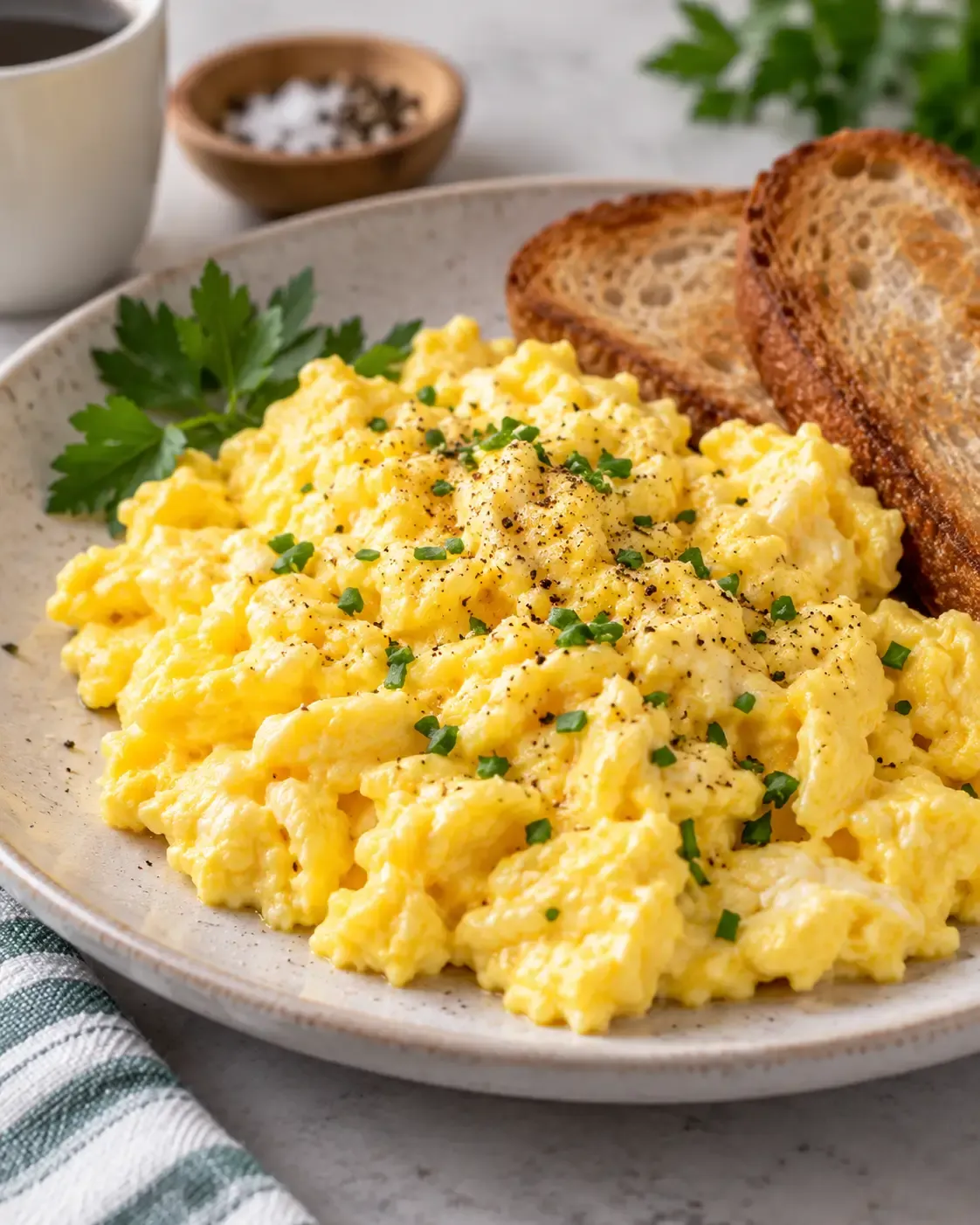
Soft, creamy scrambled eggs cooked gently in butter with a small splash of milk for tender curds and a simple stovetop finish.
Contains: Egg · Milk
Contains egg and milk.
WHY IT WORKS
Why This Recipe Works
01
Use Gentle Heat
Medium-low heat gives the eggs time to form soft, tender curds instead of tightening before you can fold them.
02
Butter the Pan
Melting the butter before the eggs go in adds richness and helps the soft curds release cleanly from the pan.
03
Stop While Glossy
Taking the eggs off the heat while they are softly set and still slightly glossy lets residual heat finish them without drying them out.
WHAT YOU’LL NEED
Equipment
THE RECIPE
Ingredients & Method
Use these cooking tools without leaving the recipe. Change the servings, switch measurements, keep a private note in this browser, and use any timer buttons shown below the method steps.
Ingredient quantities have been scaled. Cooking time, oven temperature, pan size and method timings are unchanged.
My Notes
Ingredients
-
-
Tools
-
-
-
Tools
Method
Tap a step number as you finish it.
Timed steps show a timer button beneath the instruction.
-
Crack the eggs into a medium mixing bowl. Add the milk, salt and black pepper, then whisk for about 30 seconds, until the yolks and whites are completely blended and the mixture is slightly frothy.
-
Set a 10-inch nonstick skillet over medium-low heat. Add the butter and let it melt, swirling to coat the pan. The butter should foam gently without browning.
-
Pour in the egg mixture. Let it sit for about 10 seconds, then use a silicone spatula to sweep the setting egg from the edges toward the center, tilting the pan so uncooked egg flows into the cleared spaces.
-
Continue making slow, broad folds for about 2 to 3 minutes, until soft curds have formed and the eggs are mostly set but still slightly glossy, with no pools of liquid egg remaining.
-
Remove the skillet from the heat. Fold the eggs once or twice more, taste and adjust the seasoning if needed, then transfer them to a plate and serve immediately.
COOKING GUIDANCE
Practical Cooking Notes
Doneness
Cook until the eggs are softly set with no pools of liquid egg remaining, then remove them from the heat while the curds are still slightly glossy because residual heat will continue to firm them.
Recipe tools
Adapt This Recipe
Change the quantities, measurements, pan, cooking method or ingredients, then turn what you need into a shopping list.
Dietary options
Make This Recipe Work for You
Only straightforward swaps are offered automatically. If changing a defining ingredient would effectively create a different dish, that conversion is left out.
Make It Dairy-Free
Change the following ingredients:
Replace2 tablespoons (tbsp) whole milk
With2 tablespoons (tbsp) unsweetened neutral plant milk
Replace30 millilitres (ml) whole milk
With30 millilitres (ml) unsweetened neutral plant milk
Use the same quantity of an unsweetened neutral plant milk; flavor, protein and browning can differ.
Replace1 tablespoon (tbsp) unsalted butter
With1 tablespoon (tbsp) unsalted plant-based butter
Replace15 grams (g) unsalted butter
With15 grams (g) unsalted plant-based butter
Use the same quantity of a plant-based butter suited to cooking or baking as required.
For allergies, intolerances or strict dietary requirements, check the labels of the specific products you use. These swaps do not certify a recipe or ingredient as allergen-free.
Recipe Notes
Ingredient Notes
A small splash of whole milk loosens the beaten eggs without making them watery. Whisk the eggs, milk, salt and pepper until no separate streaks of white remain before they go into the pan.
Useful Substitutions
Half-and-half or 2% milk can replace the whole milk in the same quantity. Salted butter can replace unsalted butter; reduce the added salt slightly to account for the extra seasoning.
INGREDIENT QUALITY
Quality Note
For the most tender curds, use a nonstick pan over medium-low heat and remove the eggs while they are softly set and still slightly glossy. If the pan gets too hot, pull it off the heat briefly before continuing.
COOKING TIPS
Tips
Whisk Until Even
Break up the whites completely so the eggs cook at the same rate and the finished curds have an even color and texture.
Keep the Heat Moderate
If the butter browns quickly or the eggs set as soon as they hit the pan, lower the heat before continuing.
Sweep, Then Fold
Use broad, slow strokes from the edge toward the center so soft curds form without breaking the eggs into tiny dry pieces.
Serve Right Away
Scrambled eggs keep cooking from residual heat, so transfer them from the hot pan and serve as soon as they are done.
MAKE IT LAST
Storing, Freezing & Reheating
Storing
Scrambled eggs are best fresh. Refrigerate leftovers within 2 hours in a covered container and use them within 3 to 4 days.
Freezing
Freezing is possible, but the soft texture can become firmer and slightly watery after thawing. For the best result, make scrambled eggs fresh instead.
Reheat on the Stovetop
Warm leftovers gently in a nonstick pan over low heat, folding occasionally. A small splash of milk can help loosen eggs that have firmed in the refrigerator.
Reheat in the Microwave
Cover loosely and microwave in short 15- to 20-second intervals, stirring between each, until hot throughout. Stop as soon as the eggs are heated to avoid making them rubbery.
ESTIMATED PER SERVING
Nutrition
1 of 2 servings
Nutrition information is an estimate. Where shown, % Daily Value uses standard US Daily Values for adults and children aged 4+; actual values vary with ingredient brands, exact quantities and portion size.
QUESTIONS
Scrambled Eggs FAQs
How do I keep scrambled eggs soft instead of rubbery?
Keep the pan over medium-low heat, use broad slow folds and remove the eggs while they are softly set and still slightly glossy. High heat and extra cooking time are the main causes of dry, rubbery scrambled eggs.
Do I need to add milk to scrambled eggs?
No. Eggs can be scrambled without milk, but this recipe uses a small amount to slightly loosen the mixture and give the curds a softer finish. Avoid adding much more, which can make the eggs watery.
What is the best pan for scrambled eggs?
A 10-inch nonstick skillet works well for four eggs because it gives the mixture enough room to form curds without spreading too thinly. A well-seasoned skillet can also work if the eggs release cleanly.
Can I make scrambled eggs without whole milk?
Yes. Use 2% milk or half-and-half in the same quantity, or simply leave the milk out. If you omit it, the eggs will be slightly firmer but the method stays the same.
When should I take scrambled eggs off the heat?
Remove the pan when the eggs are softly set with no pools of liquid egg remaining but the curds still look slightly glossy. They will continue to firm from residual heat after you take them off the stove.

Looking for Something Else to Cook?
Browse more SinOrSlim recipes or use the recipe tools to adapt what you already have.